The following months were very sad and tedious. I would often look at the sky skeptically lost in thought. I missed Milan so much that I spent the days locked in my apartment, listening to the radio. My head went over the possible causes of his disappearance about a million times, always to conclude that whatever the cause had been, I had to let go. However, I couldn’t take him out of my mind.
More interesting, being an atheist, I began going to church. I needed some answers, to feed my soul with bible messages, to reencounter peace and beauty. And by attending services regularly, I learned that God grants you wishes if you have faith and you know how to pray. The truth is I didn’t have any faith. So I started to pray, just in case.
One evening I was heading to the market for a soda, looking at the sky as usual. When I looked back down, I almost fainted. In front of my eyes, I saw an angel-like being. He would be better described as Milan’s double coming out of the market. As he opened the door, I could see that he was carrying a pack of beer under his arm (an eighteenth pack, of course). Well, his taste for alcohol seemed to differ from what I was used to, but I didn’t know that two men could look alike so much. With elegance and speed, I inspected him to conclude that I wasn’t dreaming. I also concluded that he liked me. Third conclusion, he was kind of fast. We exchanged four words and that was it:
-Corona.- I said.
-Yes, my favorite.
When I came out of the market, he was still at the door waiting for me. It was raining. Next, he walked me to church and, when we said good bye, I had to twist my face so he wouldn’t french kiss me in front of the Lord’s house. As I said, I am an atheist. But from that day, I believe in miracles.
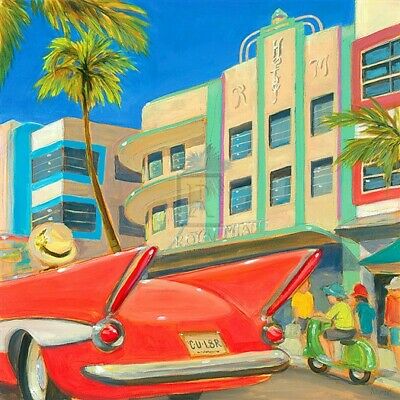
Miami Night, oil painting with palette knife-Miami de noche, pintura al óleo con espátula, Leonid Afremod
Por Armida Read
Los meses siguientes fueron muy tristes y tediosos. A menudo miraba al cielo escépticamente perdida en una nube de recuerdos. Extrañaba tanto a Milán que me pasaba horas encerrada en mi apartamento escuchando la radio. Repasé mentalmente las posibles causas de su desaparición alrededor de un millón de veces, siempre para concluir que, cualquiera que hubiese sido la causa, tenía que olvidarlo. Sin embargo, no podía sacármelo de la cabeza.
Más interesante todavía, siendo atea, comencé a ir a la iglesia. Necesitaba respuestas, alimentar mi alma con mensajes bíblicos, reencontrar la paz y la belleza. Y oyendo misa regularmente aprendí que Dios concede deseos, si tienes fe y sabes cómo rezar. La verdad es que yo no tenía ninguna fe. Así que empecé a rezar, por si acaso.
Una tarde, iba en dirección al supermercado a comprar una gaseosa mirando al cielo como de costumbre. Cuando volví a mirar al suelo, casi me desmayo. Delante de mis ojos había a un ser con forma de ángel. Podríamos describirlo mejor como el doble de Milán que salía del supermercado. Cuando abrió la puerta, vi que llevaba una caja de cervezas bajo el brazo. De dieciocho botellines, naturalmente. En realidad, su gusto por el alcohol parecía diferir un poco del que estaba acostumbrada, pero no tenía ni idea de que dos hombres podían parecerse tanto. Con elegancia y velocidad, le inspeccioné y concluí que no estaba soñando. También concluí que yo le gustaba. Tercera conclusión, era más bien rápido. Intercambiamos cuatro palabras y fueron suficientes.
-Corona –dije yo.
-Sí, mi favorita.
Cuando salí del supermercado, él todavía estaba esperándome en la puerta. Estaba lloviendo. Después me acompañó a la iglesia, y cuando nos despedimos, tuve que girar la cara para que no me besara en la boca delante de la casa del Señor. Como ya he dicho, soy atea. Pero desde ese día, creo en los milagros.
En un mundo nuevo, no habría dolor, o eso creíamos durante vidas enteras. ¿Cómo no iba a ser ésa la aspiración más sensata? Sentados en el banco de siempre, y angustiados como nunca, nos mirábamos sin vernos, como ya nos pasaba desde hacía un tiempo.
Me lo había dejado entrever semanas atrás, en un nuevo silencio, tras el coito habitual. Yo esperaba su palabra, pero no llegó, o sí, pero a destiempo, cuando ya no cabía entre los dos nada que no fuese un adiós. Pude presenciar entonces, como nunca antes, lo que hacía tanto se había ido, y supe sin preguntar lo que nadie me podría haber asegurado sin mentir.
Lo miraba y lo veía de nuevo, mientras le daba las gracias y me despedía. No recuerdo si usé palabras o gestos, si lo hice de verdad o solo lo imaginé (aunque sé hace poco, pero lo sé con certeza, que es una ficción pretender saber todo de las cosas con la intención de estar segura de no equivocarme). Y aunque él lo dijese primero aquel día en la cama con su silencio, yo lo supe justo antes en esa misma cama, y junto a él, con el mío.
Sentados en nuestro banco, cara y cara y sin protección, volvimos a sentir durante dos minutos lo que hacía ya meses se había ido. Descubrimos entonces que nos queríamos lo suficiente para dejarnos ir, a la espera de una nueva primavera repleta de ilusiones tras un invierno vacío de esperanza.
¿O acaso sabemos de algo mejor, o distinto al dolor, para seguir confiando en el amor?
In a new world, there would be no pain, or we believed so for lifetimes. How could that not be our most sensible aspiration? Sitting on the usual bench, and distressed like never before, we looked at each other without seeing one another, as we had been doing for some time.
He had let me glimpse it weeks ago, in a new silence after the usual intercourse. I waited for his word, but it didn’t come. Or it did, but at the wrong moment, when there was no room between the two of us for anything else than a goodbye. I was then able to witness, like never before, what had been gone for so long, and I knew without asking, what no one could have assured me without lying.
I looked at him, and saw him again, while I thanked him and said goodbye. I don’t remember if I used words or gestures; if I really did it, or I just imagined it (although I learned recently, but I know for sure, that pretending to know everything about things with the intention of being sure is a fiction.) And even if he said it first that day, in bed with his silence, I knew it right before, in that same bed, with my silence.
Sitting on our bench, face to face, and without protection, we felt for two minutes what it had been gone for months. We discovered then, that we loved each other good enough to let go, waiting for a new spring full of illusions after a winter empty of hope.
Or do we know of anything better, or different, from pain, to continue believing in love?
Por Mar Martínez Leonard

Motril,
entre Europa y África
sueñas azúcar.

La esperanza busca en tu orilla
una puerta al paraíso.

La fiereza se olvidó
de tus barricas rojas
y las últimas cañas
duermen su dulzura en Varadero.

Motril,
hija del aire,
ciudad de parques trasatlánticos
de guarapo verde
y de gritos envejecidos
entre delirios de ron.
By Mar Martínez Leonard

Motril,
between Europe and Africa
you dream of sugar

Hope searches at your shore
a door to paradise.

The fierceness forgot
about your red barrels
and the last reeds
sleep their sweetness
in Varadero.

Motril,
daughter of the air,
transatlantic city of parks,
of green guarapo
and of screams aged
among delusions of rum.
Es que había “covid” (una pandemia), y se auguraba el fin del mundo…
Por Mar Martínez Leonard
Es que había “covid” (una pandemia), y se auguraba el fin del mundo. O, más bien, se auguraba el fin del mundo tal y como lo conocíamos. Así, como entre las gentes de fe se sabía que ese día llegaría sin avisar, como un ladrón en la noche, yo ya estaba preparada.
Y fue en el aniversario de su partida cuando encontré aquella carta de Mario en el buró de mi tía Pilar, que decía: “Querida Silvia: Hoy he tenido noticias tuyas. No comprendo nada. Coincido contigo en muchas cosas, pero en otras, pienso que te equivocas. Como siempre, partiré de la misma base, que no es otra que mi amor por ti. Nuestro amor es de hierro, es irrompible. Lo es y lo seguirá siendo. Siempre, hasta después de la muerte. Te quiere de aquí hasta Júpiter y de regreso, Mario”
Tras quedarme dormida brevemente, esa misma noche, descifré por fin sus palabras en el sueño. Y me estremecieron. Por eso, a partir de ese momento dejé de medir mi riqueza en objetos materiales o en cantidades importantes en el banco. A partir de entonces, empecé a medir mi riqueza en vivencias.
IMÁGENES DE GALILEO CONTRERAS ALCÁZAR
By Mar Martínez Leonard
The thing is that there was «covid» (a pandemic) and the end of the world was predicted. Or, rather, the end of the world as we knew it was predicted. Thus, since among people of faith, it was known that that day would come without warning, like a thief in the night, I was ready.
And it was on his departure’s anniversary, when I found that letter from Mario in my aunt Pilar’s bureau, that said: “Dear Silvia, Today I heard from you. I do not understand anything. I agree with you in many things, but in other things, I believe you are wrong. As always, I will be based on the same principle, which is none other than my love for you. Our love is made of iron, it is unbreakable. It is and it will continue to be. Always, until after death. Loves you from here to Jupiter and back, Mario”.
After falling asleep briefly, that night, I finally deciphered his words in the dream. And they shook me. From that moment on, I stopped measuring my wealth by tangible objects, or by large amounts at the bank. From then on, I began to measure my wealth in experiences.
El olor dulce del tabaco aún sigue en mi memoria. El abuelo enrollaba su tabaco, colaba en la tarde su café y se reclinaba en un sillón para contarnos de la guerra, siempre la misma historia sobre las monedas enterradas en los muros del ingenio, la cambiaba o la inventaba cada vez y el tiempo parecía gravitar en humo y en la luz de la lámpara de aceite. Como el abuelo cambiaba la historia cada vez, la relativa ubicación de las monedas cambiaba cada vez. En aquellos tiempos mi padre agujereó las murallas con un pico, compró perros rastreadores de tesoros según él. Se sentaba como un chico a los pies del abuelo cada tarde y le encendía el tabaco con la esperanza de una revelación exacta del lugar, mas el abuelo con cierta picardía volvía a torcer la historia de las monedas y pasándose la mano por la blanca barba echaba la última bocanada de humo hacia el techo, decía unas palabras inconclusas sobre las monedas e inclinaba el rostro como si anduviera en profunda meditación y se dormía. Mi padre en aquellos tiempos salía a agujerear los muros, fumaba tabaco buscando una revelación, se inventó un aparato de buscar metales, creó un mapa, un plan de excavación, buscó ayuda entre sus amistades que se sentaban cada tarde delante del abuelo como si apelaran a un milagro, y la historia cambiaba y se repetía cada noche. El abuelo en persona visitaba las operaciones de búsqueda de vez en cuando y apuntaba con el bastón cada vez a una pared diferente, a un montón de piedra diferente, por lo que movieron el sitio de un lugar a otro hasta aplanarlo y cernieron la tierra tantas veces que había un finísimo hollín que gravitaba como una neblina en todas partes y envolvía las casas y levitaba en las aguas de los ríos como una gelatinosa ceniza. Mi padre en aquel tiempo contrajo una tos persistente por lo que distinguíamos su regreso a casa cada tarde en medio de la densa neblina, con un pañuelo en la boca hablaba como un bandido en secreto de los planes y la proximidad del objetivo y se sentaba delante del abuelo cada tarde a marcar sobre el rústico mapa nuevos trazos. El abuelo tenía dos monedas de oro que suspendía en el aire y aseveraba entre bocanadas de humo “monedas como estas” y cambiaba la historia nuevamente o la conversación mientras todos le miraban sin entender. Una noche entrada ya la madrugada el abuelo habló sobre la posible ubicación de las monedas mientras todos dormitaban, sólo mi padre hacía trazos en el mapa que se había alargado como un pergamino romano y que enrollaba en un palo de escoba cuidadosamente. Al día siguiente regresaron en la densa neblina vociferando los hombres de mi padre con una monedita entre los dedos, lo que alentó a todos en la región y se encendieron faroles y se hizo dos turnos de excavación encabezados por mi padre, se compraron nuevas herramientas para remplazar los amellados picos, como nadie dormía se usaron los bastidores de las camas como cernidores, sólo se extrajo de la tierra dos herraduras de mulo y todo tipo de chatarra, menos oro. Y después de un tiempo volvieron a reunirse junto al abuelo que ahora sostenía una moneda entre los dedos y aseguraba “monedas como esta” y hablaba ceremoniosamente como un patriarca y pausaba o demoraba las ideas o entraba en profunda meditación o sueño. Pasaron años en la tarea de las excavaciones y aunque no hubo oro se diversificó la búsqueda por la región de Santa Ana de La Viajaca debido a nuevas pistas, nuevas revelaciones. Se usó el polvo blanco que cernían ligado con agua para pintar las casas, las piedras para hacer cercas que servían para demarcar los límites de las propiedades de la región, cambió la geografía y fueron removidos los muros todos del ingenio y el abuelo continuó sentándose todas las tardes a enrollar tranquilo su tabaco y hacer diferente la historia cada tarde mientras miraba complacido como quien encuentra el oro en la caída del sol sobre las montañas que antiguamente se escondían detrás de los muros del ingenio.
Fragmento de En el lenguaje lascivo de los perros, Ediciones Velámenes, 2012, disponible aquí
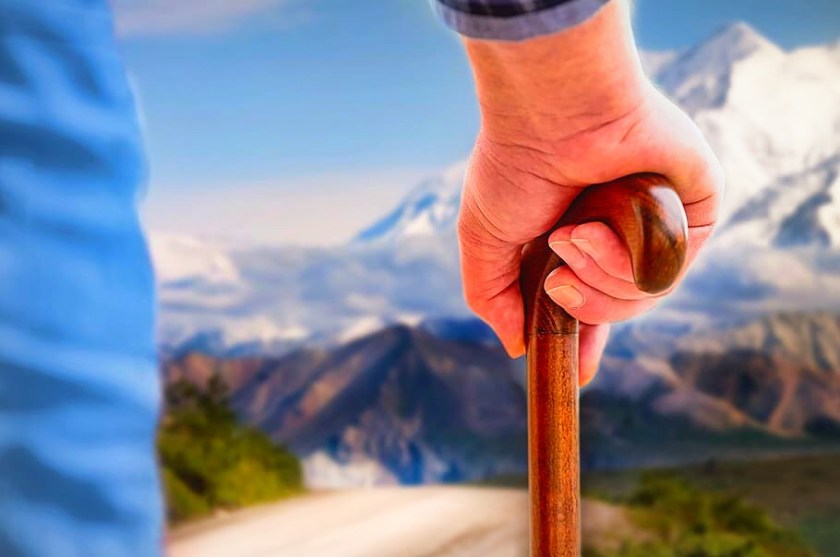
Foto Oro en las Montañas, Pxfuel
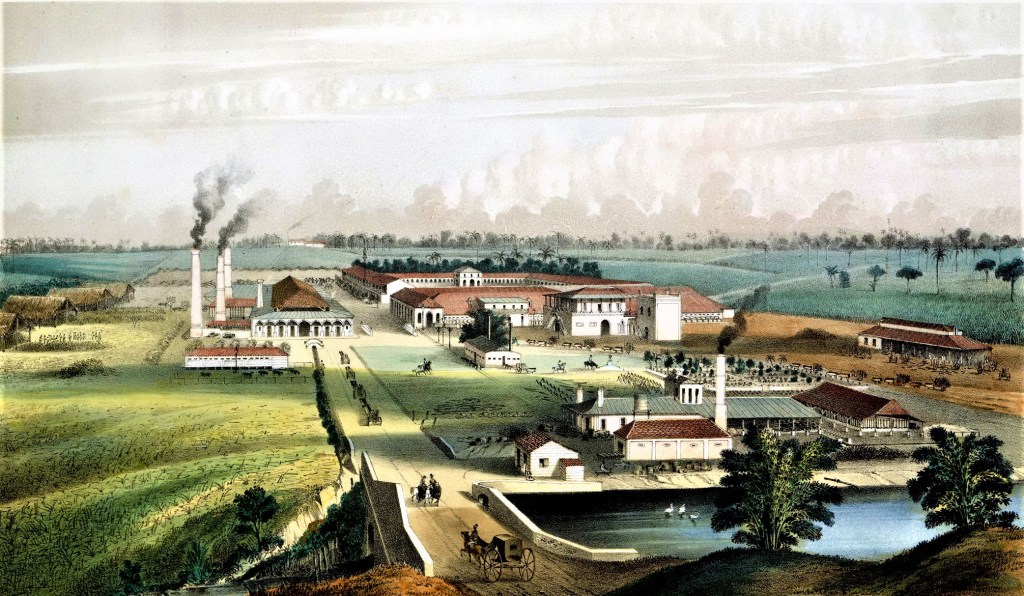
Ingenio Flor de Cuba, Impresión litográfica coloreada a mano, Eduardo Laplante, 1857
By Adalberto Guerra
The sweet smell of tobacco is still in my memory. Grandpa rolled his tobacco, strained his coffee in the afternoon and leaned back on an armchair to tell us of the war, always the same story about the coins buried inside the walls of the sugar mill. He changed it or invented it every time, and time seemed to gravitate in the smoke and on the light of the oil lamp. Since Grandpa changed the story every time, the relative location of the coins changed every time. In those days, my father pierced the walls with a pick, and bought dogs that sniffed treasures according to him. He sat like a boy at Grandpa’s feet every afternoon and lit his tobacco, waiting for an exact revelation of the place, but Grandfather, with a certain mischief, twisted the story of the coins again and again, passing his hand through his white beard, threw a last puff of smoke towards the ceiling, said a few unfinished words about the coins, and tilted his face as if he were in deep meditation, then fell asleep. My father in those days went out to drill holes in the walls, he smoked tobacco looking for a revelation, he invented a device to search for metals, he created a map, an excavation plan, he sought help from his friends who sat every afternoon in front of Grandpa as if they were appealing to a miracle, and the story changed and repeated itself every night. Grandpa himself visited in person the search operations from time to time, and each time he pointed his cane at a different wall, at a different pile of stones, so they moved the site from one place to another until everything was flattened, and they sifted the ground so many times that there was a very fine soot that gravitated like a mist everywhere, enveloping the houses and levitating on the waters of the rivers like a gelatinous ash. My father at that time contracted a persistent cough so we distinguished his return home every afternoon in the middle of a dense fog. With a handkerchief over his mouth, he spoke secretly like a bandit about the plans and the proximity of the objective, and sat in front of Grandfather every afternoon to mark new strokes on the rustic map. Grandfather had two gold coins that he suspended in the air while affirming between puffs of smoke «coins like these» and again, he changed the story or the conversation while everyone looked at him without understanding. One night in the early morning, Grandfather talked about the possible location of the coins while everyone was asleep, only my father made outlines on the map that had been lengthened like a Roman parchment and that he rolled up on a broomstick carefully. The next day, my father’s men returned in the dense fog shouting with a small coin between their fingers, which encouraged everyone in the region, and lanterns were lit, and two shifts of excavation led by my father were made, new tools were bought to replace the nicked picks; as no one slept, the bed frames were used as sieves. Only two mule horseshoes and all kinds of scrap metal were extracted from the ground, except for gold. And after a while, they met again with Grandfather who now held a coin between his fingers and assured «coins like this» and spoke ceremoniously like a patriarch and paused or delayed ideas or went into deep meditation or sleep. Years passed in the task of excavations and although there was no gold, the search on the region of Santa Ana de La Viajaca diversified due to new clues, new revelations. The white powder that they sifted together with water was used to paint the houses, the stones to make fences that served to demarcate the limits of the properties of the region, the geography changed and the walls of the mill were removed. And Grandfather continued to sit every afternoon to quietly roll his tobacco and make the story different every afternoon while watching pleased, as if finding gold at sunset on the mountains that formerly hid behind the walls of the sugar mill.
Extract from En el lenguaje lascivo de los perros (In the Lascivious Languge of Dogs), Ediciones Velamenes, 2012, available in Spanish here
Translation from Spanish: Mar Martínez Leonard
Photo Gold on the Mountains, Pxfuel
Flor de Cuba Sugar Factory, Lithographic print, hand colored. Eduardo Laplante, 1857











 El Artca