Es que había “covid” (una pandemia), y se auguraba el fin del mundo…
Por Mar Martínez Leonard
Es que había “covid” (una pandemia), y se auguraba el fin del mundo. O, más bien, se auguraba el fin del mundo tal y como lo conocíamos. Así, como entre las gentes de fe se sabía que ese día llegaría sin avisar, como un ladrón en la noche, yo ya estaba preparada.
Y fue en el aniversario de su partida cuando encontré aquella carta de Mario en el buró de mi tía Pilar, que decía: “Querida Silvia: Hoy he tenido noticias tuyas. No comprendo nada. Coincido contigo en muchas cosas, pero en otras, pienso que te equivocas. Como siempre, partiré de la misma base, que no es otra que mi amor por ti. Nuestro amor es de hierro, es irrompible. Lo es y lo seguirá siendo. Siempre, hasta después de la muerte. Te quiere de aquí hasta Júpiter y de regreso, Mario”
Tras quedarme dormida brevemente, esa misma noche, descifré por fin sus palabras en el sueño. Y me estremecieron. Por eso, a partir de ese momento dejé de medir mi riqueza en objetos materiales o en cantidades importantes en el banco. A partir de entonces, empecé a medir mi riqueza en vivencias.
IMÁGENES DE GALILEO CONTRERAS ALCÁZAR
By Mar Martínez Leonard
The thing is that there was «covid» (a pandemic) and the end of the world was predicted. Or, rather, the end of the world as we knew it was predicted. Thus, since among people of faith, it was known that that day would come without warning, like a thief in the night, I was ready.
And it was on his departure’s anniversary, when I found that letter from Mario in my aunt Pilar’s bureau, that said: “Dear Silvia, Today I heard from you. I do not understand anything. I agree with you in many things, but in other things, I believe you are wrong. As always, I will be based on the same principle, which is none other than my love for you. Our love is made of iron, it is unbreakable. It is and it will continue to be. Always, until after death. Loves you from here to Jupiter and back, Mario”.
After falling asleep briefly, that night, I finally deciphered his words in the dream. And they shook me. From that moment on, I stopped measuring my wealth by tangible objects, or by large amounts at the bank. From then on, I began to measure my wealth in experiences.
El olor dulce del tabaco aún sigue en mi memoria. El abuelo enrollaba su tabaco, colaba en la tarde su café y se reclinaba en un sillón para contarnos de la guerra, siempre la misma historia sobre las monedas enterradas en los muros del ingenio, la cambiaba o la inventaba cada vez y el tiempo parecía gravitar en humo y en la luz de la lámpara de aceite. Como el abuelo cambiaba la historia cada vez, la relativa ubicación de las monedas cambiaba cada vez. En aquellos tiempos mi padre agujereó las murallas con un pico, compró perros rastreadores de tesoros según él. Se sentaba como un chico a los pies del abuelo cada tarde y le encendía el tabaco con la esperanza de una revelación exacta del lugar, mas el abuelo con cierta picardía volvía a torcer la historia de las monedas y pasándose la mano por la blanca barba echaba la última bocanada de humo hacia el techo, decía unas palabras inconclusas sobre las monedas e inclinaba el rostro como si anduviera en profunda meditación y se dormía. Mi padre en aquellos tiempos salía a agujerear los muros, fumaba tabaco buscando una revelación, se inventó un aparato de buscar metales, creó un mapa, un plan de excavación, buscó ayuda entre sus amistades que se sentaban cada tarde delante del abuelo como si apelaran a un milagro, y la historia cambiaba y se repetía cada noche. El abuelo en persona visitaba las operaciones de búsqueda de vez en cuando y apuntaba con el bastón cada vez a una pared diferente, a un montón de piedra diferente, por lo que movieron el sitio de un lugar a otro hasta aplanarlo y cernieron la tierra tantas veces que había un finísimo hollín que gravitaba como una neblina en todas partes y envolvía las casas y levitaba en las aguas de los ríos como una gelatinosa ceniza. Mi padre en aquel tiempo contrajo una tos persistente por lo que distinguíamos su regreso a casa cada tarde en medio de la densa neblina, con un pañuelo en la boca hablaba como un bandido en secreto de los planes y la proximidad del objetivo y se sentaba delante del abuelo cada tarde a marcar sobre el rústico mapa nuevos trazos. El abuelo tenía dos monedas de oro que suspendía en el aire y aseveraba entre bocanadas de humo “monedas como estas” y cambiaba la historia nuevamente o la conversación mientras todos le miraban sin entender. Una noche entrada ya la madrugada el abuelo habló sobre la posible ubicación de las monedas mientras todos dormitaban, sólo mi padre hacía trazos en el mapa que se había alargado como un pergamino romano y que enrollaba en un palo de escoba cuidadosamente. Al día siguiente regresaron en la densa neblina vociferando los hombres de mi padre con una monedita entre los dedos, lo que alentó a todos en la región y se encendieron faroles y se hizo dos turnos de excavación encabezados por mi padre, se compraron nuevas herramientas para remplazar los amellados picos, como nadie dormía se usaron los bastidores de las camas como cernidores, sólo se extrajo de la tierra dos herraduras de mulo y todo tipo de chatarra, menos oro. Y después de un tiempo volvieron a reunirse junto al abuelo que ahora sostenía una moneda entre los dedos y aseguraba “monedas como esta” y hablaba ceremoniosamente como un patriarca y pausaba o demoraba las ideas o entraba en profunda meditación o sueño. Pasaron años en la tarea de las excavaciones y aunque no hubo oro se diversificó la búsqueda por la región de Santa Ana de La Viajaca debido a nuevas pistas, nuevas revelaciones. Se usó el polvo blanco que cernían ligado con agua para pintar las casas, las piedras para hacer cercas que servían para demarcar los límites de las propiedades de la región, cambió la geografía y fueron removidos los muros todos del ingenio y el abuelo continuó sentándose todas las tardes a enrollar tranquilo su tabaco y hacer diferente la historia cada tarde mientras miraba complacido como quien encuentra el oro en la caída del sol sobre las montañas que antiguamente se escondían detrás de los muros del ingenio.
Fragmento de En el lenguaje lascivo de los perros, Ediciones Velámenes, 2012, disponible aquí
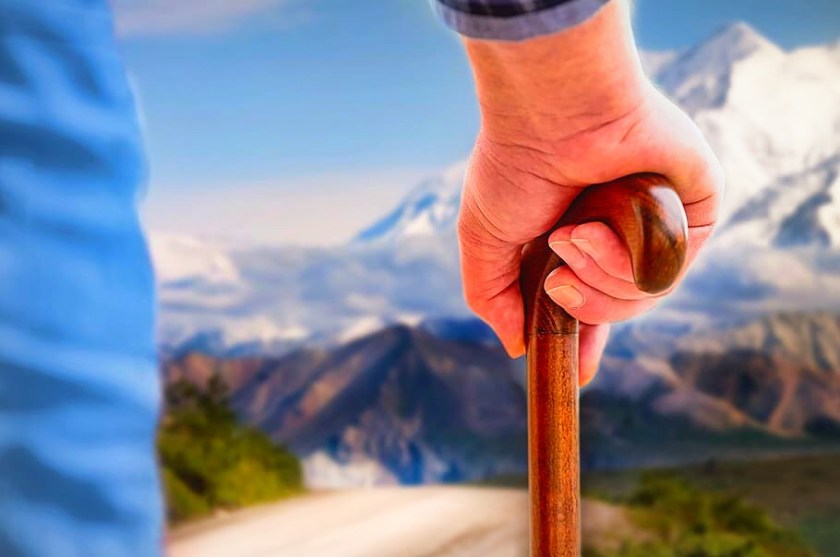
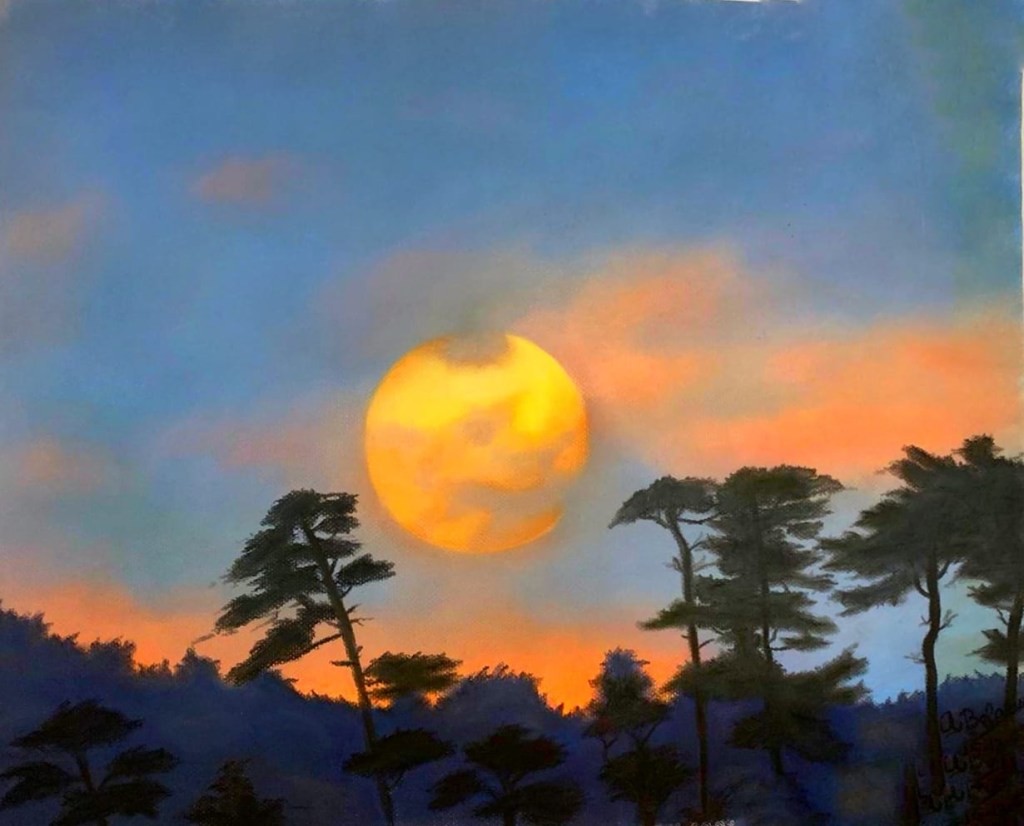
Foto Oro en las Montañas, Pxfuel
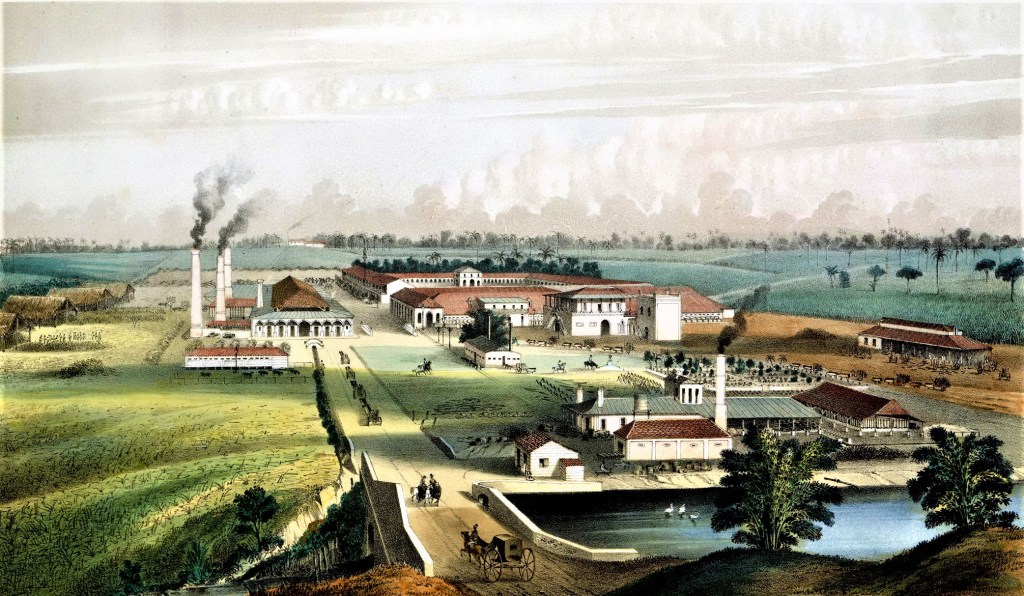
Ingenio Flor de Cuba, Impresión litográfica coloreada a mano, Eduardo Laplante, 1857
By Adalberto Guerra
The sweet smell of tobacco is still in my memory. Grandpa rolled his tobacco, strained his coffee in the afternoon and leaned back on an armchair to tell us of the war, always the same story about the coins buried inside the walls of the sugar mill. He changed it or invented it every time, and time seemed to gravitate in the smoke and on the light of the oil lamp. Since Grandpa changed the story every time, the relative location of the coins changed every time. In those days, my father pierced the walls with a pick, and bought dogs that sniffed treasures according to him. He sat like a boy at Grandpa’s feet every afternoon and lit his tobacco, waiting for an exact revelation of the place, but Grandfather, with a certain mischief, twisted the story of the coins again and again, passing his hand through his white beard, threw a last puff of smoke towards the ceiling, said a few unfinished words about the coins, and tilted his face as if he were in deep meditation, then fell asleep. My father in those days went out to drill holes in the walls, he smoked tobacco looking for a revelation, he invented a device to search for metals, he created a map, an excavation plan, he sought help from his friends who sat every afternoon in front of Grandpa as if they were appealing to a miracle, and the story changed and repeated itself every night. Grandpa himself visited in person the search operations from time to time, and each time he pointed his cane at a different wall, at a different pile of stones, so they moved the site from one place to another until everything was flattened, and they sifted the ground so many times that there was a very fine soot that gravitated like a mist everywhere, enveloping the houses and levitating on the waters of the rivers like a gelatinous ash. My father at that time contracted a persistent cough so we distinguished his return home every afternoon in the middle of a dense fog. With a handkerchief over his mouth, he spoke secretly like a bandit about the plans and the proximity of the objective, and sat in front of Grandfather every afternoon to mark new strokes on the rustic map. Grandfather had two gold coins that he suspended in the air while affirming between puffs of smoke «coins like these» and again, he changed the story or the conversation while everyone looked at him without understanding. One night in the early morning, Grandfather talked about the possible location of the coins while everyone was asleep, only my father made outlines on the map that had been lengthened like a Roman parchment and that he rolled up on a broomstick carefully. The next day, my father’s men returned in the dense fog shouting with a small coin between their fingers, which encouraged everyone in the region, and lanterns were lit, and two shifts of excavation led by my father were made, new tools were bought to replace the nicked picks; as no one slept, the bed frames were used as sieves. Only two mule horseshoes and all kinds of scrap metal were extracted from the ground, except for gold. And after a while, they met again with Grandfather who now held a coin between his fingers and assured «coins like this» and spoke ceremoniously like a patriarch and paused or delayed ideas or went into deep meditation or sleep. Years passed in the task of excavations and although there was no gold, the search on the region of Santa Ana de La Viajaca diversified due to new clues, new revelations. The white powder that they sifted together with water was used to paint the houses, the stones to make fences that served to demarcate the limits of the properties of the region, the geography changed and the walls of the mill were removed. And Grandfather continued to sit every afternoon to quietly roll his tobacco and make the story different every afternoon while watching pleased, as if finding gold at sunset on the mountains that formerly hid behind the walls of the sugar mill.
Extract from En el lenguaje lascivo de los perros (In the Lascivious Languge of Dogs), Ediciones Velamenes, 2012, available in Spanish here
Translation from Spanish: Mar Martínez Leonard
Photo Gold on the Mountains, Pxfuel
Flor de Cuba Sugar Factory, Lithographic print, hand colored. Eduardo Laplante, 1857
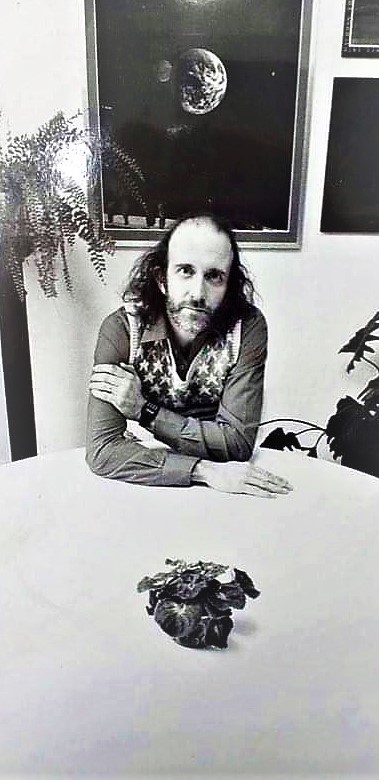
Terry Ilott hacia 1985, cortesía de Echo Maciejewski / Terry Ilott circa 1985, courtesy of Echo Maciejewski
Por Mar Martínez Leonard
El 29 de marzo de 2019 fallecía en Cheltenham, Inglaterra, el fantástico pintor Terence John Ilott, más conocido como Terry Ilott; noticia que pasó casi sin dejar huella en notas de prensa, pese a ser, para algunos, uno de los artistas británicos contemporáneos más influyentes.
Ilott, que además de artista plástico, fue profesor universitario en la Escuela de Arte de Newport, Gales, nació hace unas novecientas lunas llenas en la ciudad inglesa de Gloucester, y habría cumplido 75 años de edad el pasado 10 de diciembre.
Alumno sobresaliente, estudió bellas artes en las más prestigiosas escuelas de Gloucester, y culminó una maestría en pintura en la Royal College of Art de Londres en 1970.
Pero Ilott no sería sólo artista plástico y profesor universitario, también fue un creador visionario.
Ya en 1977, ilustró la novela de clima ficción «El mundo sumergido» para el escritor J.G. Ballard, que describe un futuro post-apocalíptico en que el calentamiento global hace inhabitable la mayor parte de la Tierra y donde el personaje central no sufre angustia ni temor, sino un progresivo embelesamiento por la caótica realidad que ha hecho perecer el mundo.
Lago de los sueños o Réquiem por Apolo, 1974 / Lake of Dreams or Requiem for Apollo, 1974
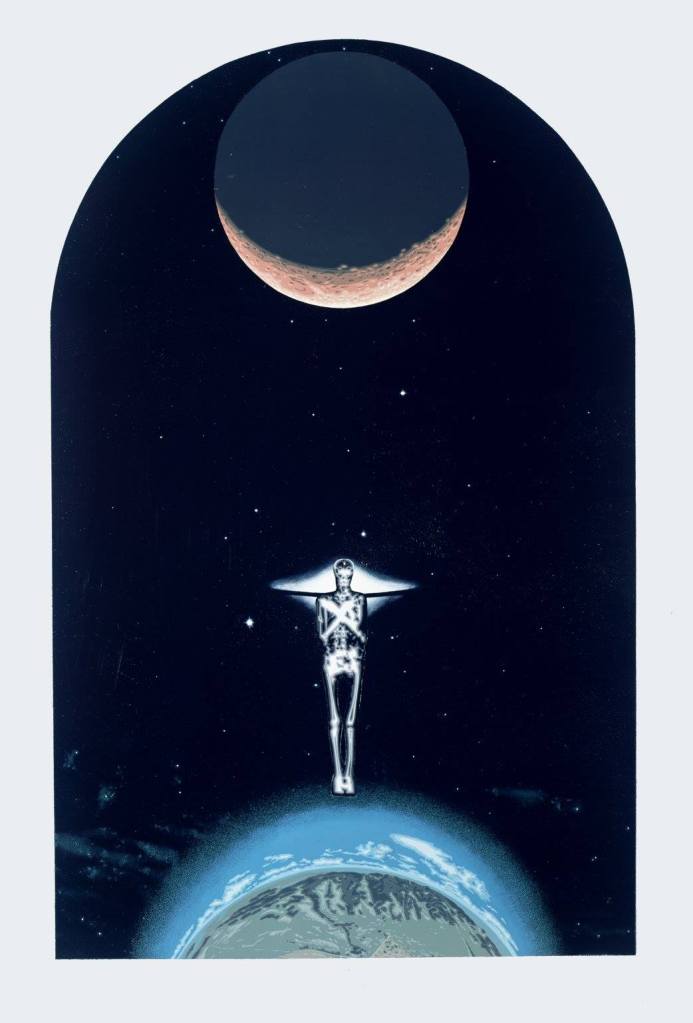
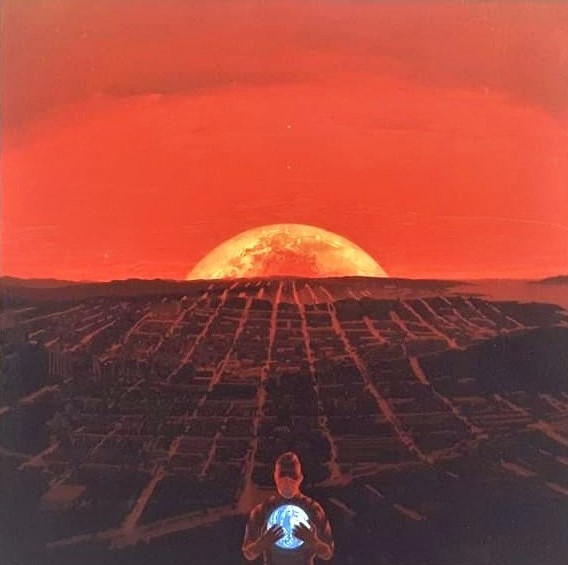
De su autoría son también pinturas inquietantemente bellas como «Réquiem por Apolo» (1974), «Fobos y Deimos» (1986), y la serie «Lucifer» (1984).
Los años 1960 lo influenciaron enormemente, en sus propias palabras: “una época muy difamada por los críticos, pero de auténtica creatividad cultural, optimismo y entusiasmo”, que supuso “una experiencia liberadora que cambió (nuestra) vida”.
Fue el creador de la hipnótica portada del álbum de art-rock Crises, del multiinstrumentista Mike Oldfield, quien en 1983 encargó a Ilott su diseño, así como la cubierta de los sencillos Moonlight Shadow y Shadow on the Wall.
Arte de tapa, Crises, Virgin Records, 1983 / Record cover, Crises, Virgin Records, 1983
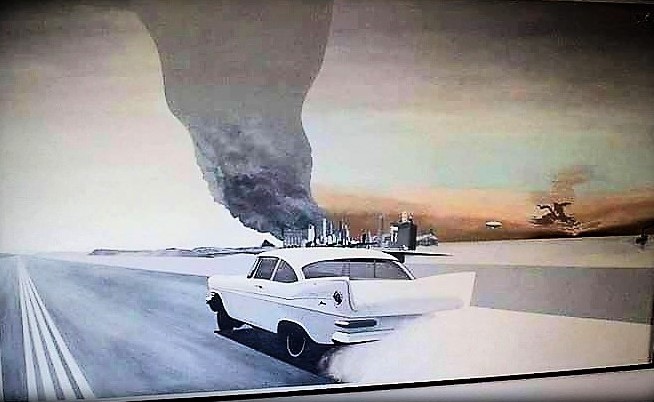
Admirador del trabajo de Samuel Palmer, Vermeer y Caspar David Friedich, de las canciones de Bob Dyland, de las películas de Powell y Pressburger, y también de Stanley Kubrick; las pinturas de Ilott contemplan el misterio como una hermosa experiencia con cualidades poéticas.
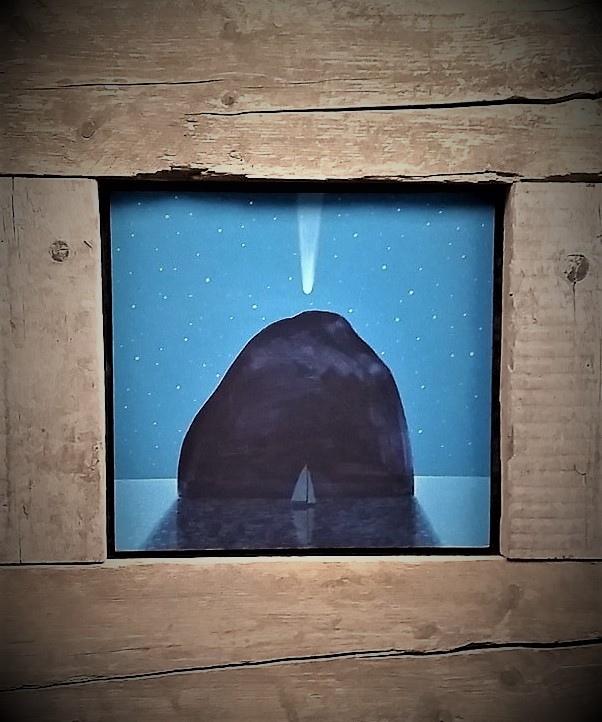
En general, las creaciones de Ilott se caracterizan por tener poca luz, debido a “una visión más bien amarga, pesimista, de la raza humana, de sus talentos y resultados”. Aunque sin llegar a ser «un pesimista absoluto», existiendo incluso en sus “lienzos más oscuros, usualmente un centelleo de esperanza”.
Uno de los medios más recurrentes que usó fue la pintura en esmalte sobre madera, con una aproximación al arte de carácter idealista, sin realizar demasiadas imágenes; según el propio Ilott: “seis en un año serían muchas. Supongo que tengo la visión de que el mundo ya está demasiado lleno de polución visual y prefiero no añadirle más, a menos que tenga una buena razón para hacerlo”.
Ascension, 1974 /Ascensión, 1974
By Mar Martínez Leonard
On March 29, 2019, the fantastic painter Terence John Ilott, better known as Terry Ilott, passed away in Cheltenham, England; news that went by almost without leaving a mark in the press, despite being for some, one of the most influential contemporary British artists.
Ilott, who in addition to being a fine artist, was a university lecturer at the Newport School of Art, Wales, was born about nine hundred full moons ago in Gloucester and would have turned 75 years old last December 10.
An outstanding pupil, he studied fine arts at the most prestigious schools of Gloucester and completed an MA. in painting at the Royal College of Art, London, in 1970.
But Ilott was not only a fine artist and a university lecturer, he was also a visionary creator.
Already in 1977, he illustrated the climate fiction novel The Drowned World for the writer J.G. Ballard, depicting a post-apocalyptic future in which global warming has caused the majority of the Earth to become unhabitable and where the central character suffers neither anguish nor fear, but a progressive fascination with the chaotic reality that has made the world perish.
Phobos and Deimos, or Mars Rising, 1986/ Fobos y Deimos, o Amanecer de Marte, 1986
Of his authorship are also the hauntingly beautiful paintings Requiem for Apollo (1974), Phobos and Deimos (1986), and the series Lucifer (1984).
Greatly influenced by the 1960s, in his own words: “(a period) much maligned by critics, but of authentic cultural creativity, optimism and enthusiasm,” that meant for him “a liberating, life-changing experience.”
He was the creator of the hypnotic cover of the art-rock album Crises, by multi-instrumentalist Mike Oldfield, who in 1983 commissioned Ilott its design, as well as the sleeves for the singles Moonlight Shadow and Shadow on the Wall.
Admirer of the works of Samuel Palmer, Vermeer and Caspar Friedrich, the songs of Bob Dylan, the films of Powell and Pressburger and Stanley Kubrick; Ilott’s paintings contemplate mystery as a beautiful experience with poetic qualities.
Untitled, 1960s / Sin título, década de 1960
In general, Iott’s creations are characterized by having little light, due to “a rather jaundiced, pessimistic view of the human race, its abilities and short-comings”. Despite all this, without being “a total pessimist,” existing even in his “darkest pictures, usually a glimmer of hope”.
One of the most recurrent mediums he used was enamel paint on wood, having an idealistic approach to art, and without producing too many images; according to Ilott himself: “six in a year would be a lot. I suppose I take the view that the world is already too full of visual pollution and I’d rather not add to it unless I have a good reason to”.
Nació para esa misión, una necesidad de la especie que se extendía por generaciones…
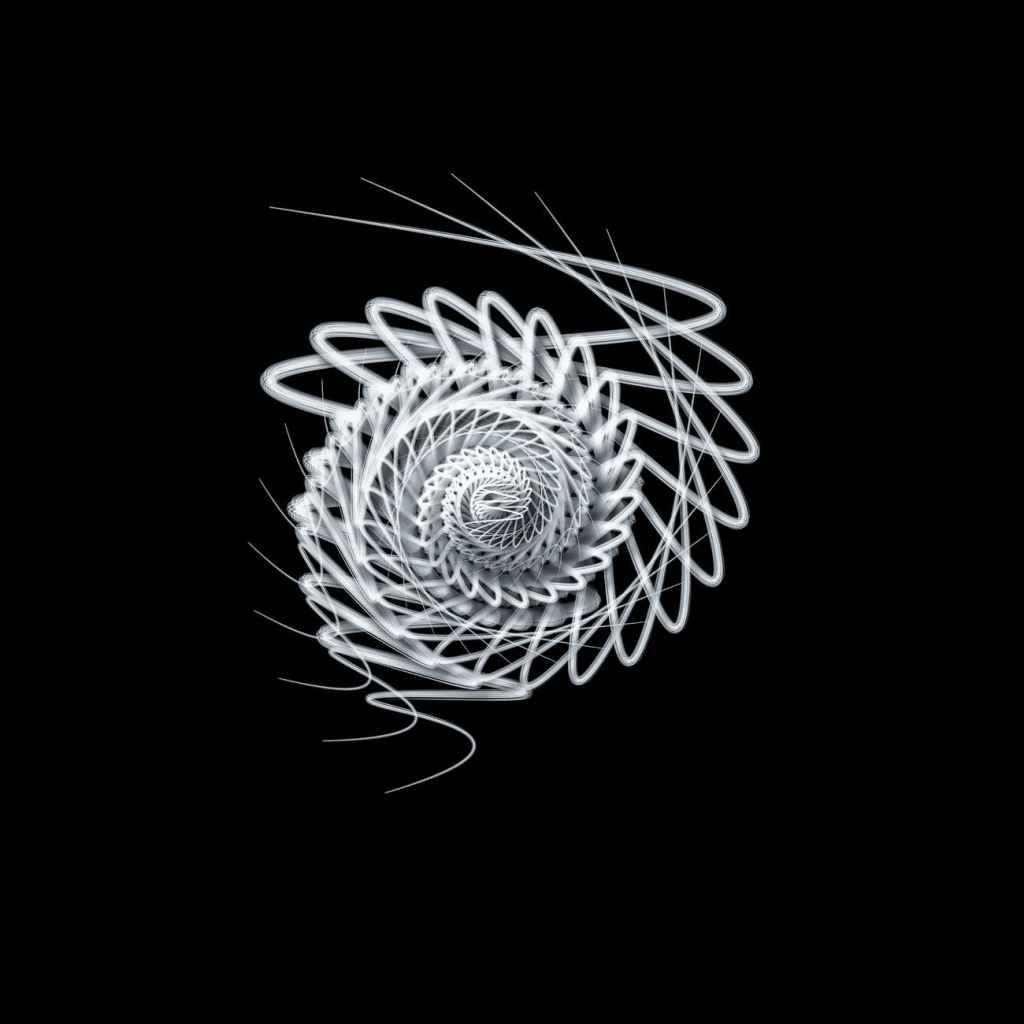
Imagen: Dentro de una bombilla 1, Adrian Limani
Por Galileo Contreras Alcázar
Nació para esa misión, una necesidad de la especie que se extendía por generaciones. La luz, esa embriagadora pasión del espíritu a la que ahora se acercaba dando volteretas a toda velocidad, queriendo alcanzarla. Por fin, detrás del brillo blanco, se acerca volando a las columnas violetas casi escondidas al interior de la bombilla. Piensa en el nirvana y su cuerpo cae carbonizado al vacío.
Photo by Frank Cone
By Galileo Contreras Alcázar
He was born for that mission, a need of the species that had spanned for generations. The light, some intoxicating passion of the spirit that he was now approaching, wanting to reach, turning somersaults at full speed. At last, behind the white glow, he flies closer to the purple columns, almost hidden, inside the bulb. He thinks of nirvana and his body falls charred into the void.
Translation: Mar Martínez Leonard
Immagine: Dentro una lampadina 2, Adrian Limani
Di Galileo Contreras Alcázar
Era nato per quella missione, un bisogno della specie che attraversava generazioni. La luce, quella passione inebriante dello spirito a cui ora si stava avvicinando, rotolando a tutta velocità, cercando arrivaci. Alla fine, dietro il bagliore bianco, vola più vicino alle colonne viola, quasi nascoste, all’interno della lampadina. Pensa al nirvana e il suo corpo cade carbonizzato nel vuoto.












 El Artca