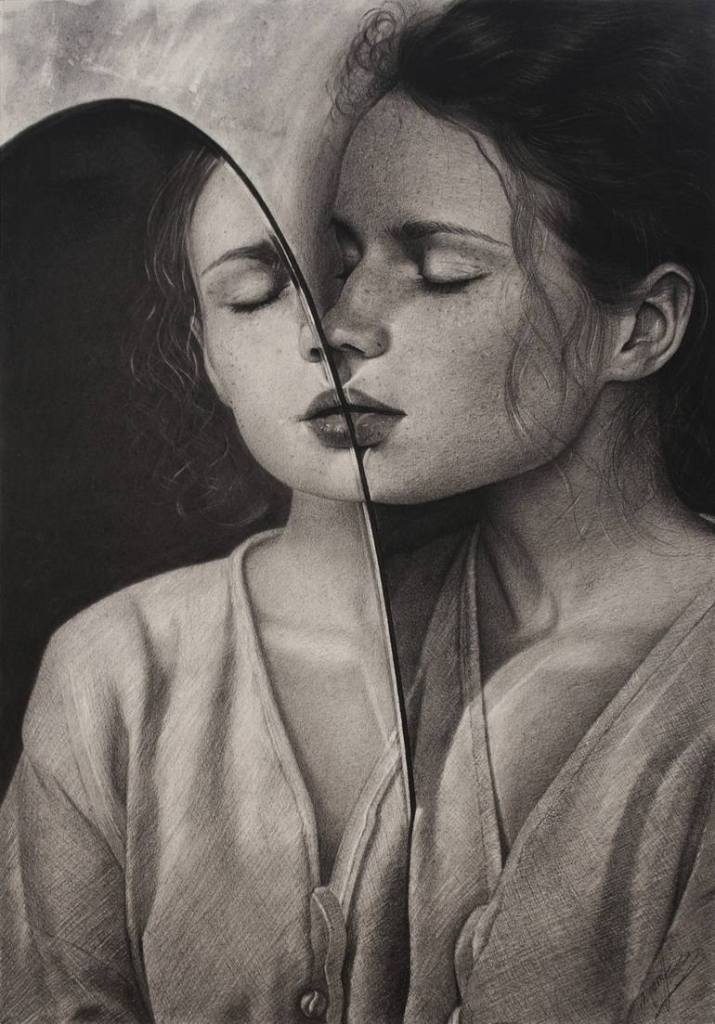
Llevo flores frescas a desconocidas esperando en su sonrisa redención. . Es tan sui géneris sonreír al vacío: el acto de sonreír ya es sinérgico el acto de sonreír genera trocitos de paz. . Muchas veces en trance de almohada todo el maquillaje resbala y desnuda dejándote viajar hasta pieles anónimas donde encuentras férreas máscaras que podrán desvelar su verdadero rostro. . Muchas veces en trance de almohada alguien dejará trocitos de espejo roto para ser recogidos y mejorar tu suerte, en ellos te verás más libre y sonreirás como onda silenciosa de agua liberada.
I bring fresh flowers to strangers waiting in their smile for redemption. . It is so sui generis to smile to the abyss: the act of smiling is already synergetic the act of smiling generates little pieces of peace. . Many times in a pillow trance all the makeup slips and undresses letting you travel to anonymous skins where you find ferrous masks that will be able to reveal their true face. . Many times in a pillow trance someone will leave little pieces of broken mirror to be picked up and improve your luck, in them you will look more liberated and smile like a silent wave of released water.
Porto fiori freschi a sconosciute aspettando nel suo sorriso redenzione. . È così sui generis sorridere nel vuoto: l’atto di sorridere è già sinergico l’atto di sorridere genera frammenti di pace. . Molte volte in trance cuscino tutto il trucco slitta e si sveste ti consente di viaggiare verso pelle anonime dove trovi le maschere ferrose che pottrano rivelare il lore vero viso. . Molte volte in trance cuscino qualcuna lascerà pezzi di specchio rotto per essere raccolto e migliorare la tua fortuna, in loro sembrerai più libero e sorriderai come un’onda silenziosa di acqua rilasciata.
Ella traía, aunque no quería, a Barrio debajo del brazo. En la mañana intentaba a veces botarlo en la parada del bus con algún pasajero despistado, o en las estanterías refrigeradas de la tienda de abarrotes. Pero Barrio se resistía a salir y se aferraba aún más a los cargadores de la cesta de su huésped. Ya de vuelta en la oficina, había dejado a Barrio olvidado en su camioneta, con la esperanza de que se olvidara de ella, y ahora estaba sentada en su cubículo con las manos sobre las sienes y los ojos cerrados, en espera de la llegada de su jefe. Así, liberada de la carga de Barrio, no podía evitar la añoranza de su olor a café y a cerveza rubia, el ambiente de los lunes de mercado, sus vivos colores, y esas calles elegidas por los bohemios para sus desvaríos. Si bien, su vista se deleitaba ahora en las luces de neón y los rascacielos infinitos de la elegante parte de la ciudad donde estaba su oficina, sin embargo volvía a aterrizar mentalmente, como si volara en un dron, sobre el tejado del edificio con más historia y personalidad de Barrio.
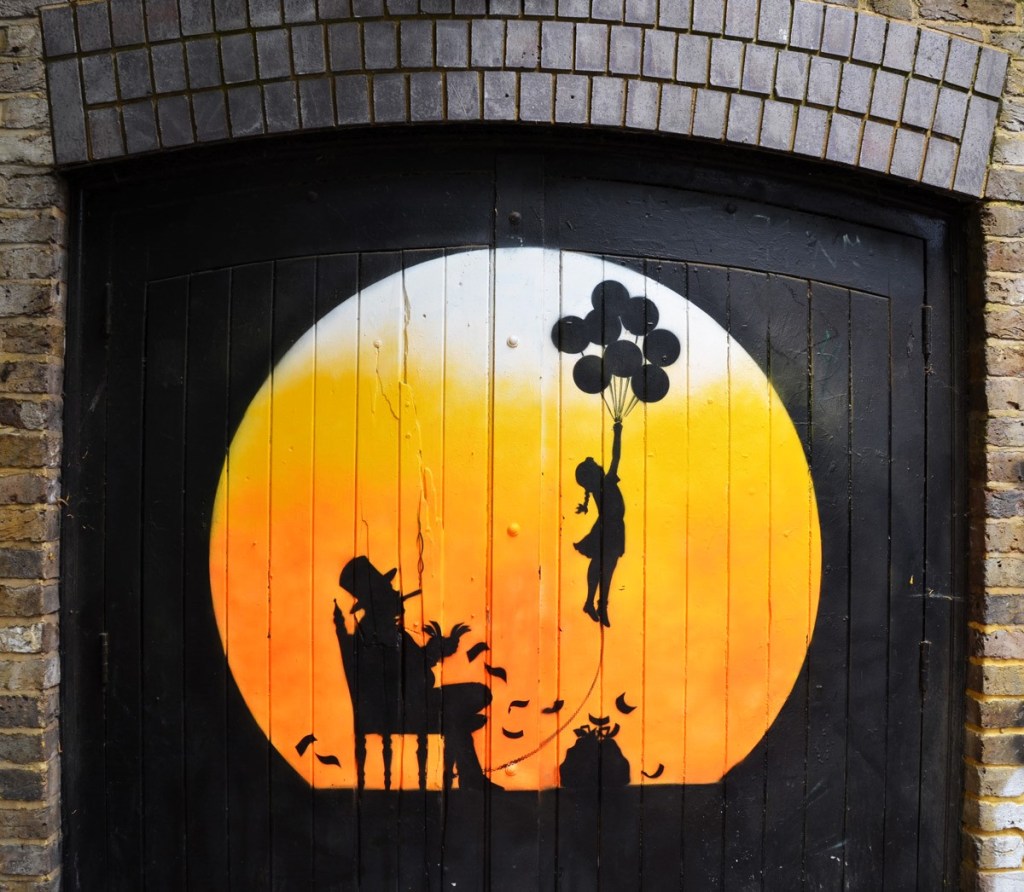
Imágenes: Murales de Otto Schade
Lectura de la autora
————-
By Mar Martinez Leonard
She was carrying, although she didn’t want to, Neighborhood under her arm. In the morning she would sometimes try to get rid of it at the bus stop with some clueless passenger, or at the refrigerated shelves of the grocery store. But Neighborhood was reluctant to leave and clung even more to the chargers of her guest’s basket. Back at the office, she had left Neighborhood forgotten in her truck, hoping he would forget about her, and was now sitting in her cubicle with her hands on her temples and her eyes shut, waiting for her boss to arrive. Thus, freed from the burden of Neighborhood, she could not avoid the longing for its smell of coffee and blond beer, the atmosphere of market Mondays, its bright colors, and those streets chosen by the bohemians for their ravings. While her eyes now reveled in the neon lights and infinite skyscrapers of the elegant part of the city where her office was located, she nevertheless mentally landed again, as if flying in a drone, on the roof of the building with more history and personality of Neighborhood.
The following months were very sad and tedious. I would often look at the sky skeptically lost in thought. I missed Milan so much that I spent the days locked in my apartment, listening to the radio. My head went over the possible causes of his disappearance about a million times, always to conclude that whatever the cause had been, I had to let go. However, I couldn’t take him out of my mind.
More interesting, being an atheist, I began going to church. I needed some answers, to feed my soul with bible messages, to reencounter peace and beauty. And by attending services regularly, I learned that God grants you wishes if you have faith and you know how to pray. The truth is I didn’t have any faith. So I started to pray, just in case.
One evening I was heading to the market for a soda, looking at the sky as usual. When I looked back down, I almost fainted. In front of my eyes, I saw an angel-like being. He would be better described as Milan’s double coming out of the market. As he opened the door, I could see that he was carrying a pack of beer under his arm (an eighteenth pack, of course). Well, his taste for alcohol seemed to differ from what I was used to, but I didn’t know that two men could look alike so much. With elegance and speed, I inspected him to conclude that I wasn’t dreaming. I also concluded that he liked me. Third conclusion, he was kind of fast. We exchanged four words and that was it:
-Corona.- I said.
-Yes, my favorite.
When I came out of the market, he was still at the door waiting for me. It was raining. Next, he walked me to church and, when we said good bye, I had to twist my face so he wouldn’t french kiss me in front of the Lord’s house. As I said, I am an atheist. But from that day, I believe in miracles.
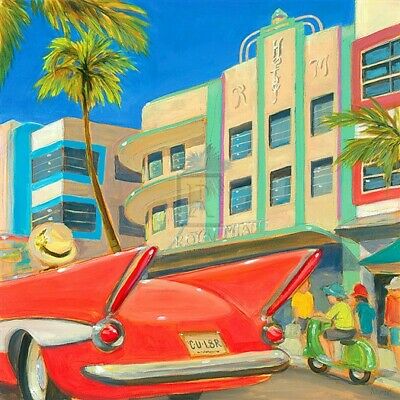
Miami Night, oil painting with palette knife-Miami de noche, pintura al óleo con espátula, Leonid Afremod
Por Armida Read
Los meses siguientes fueron muy tristes y tediosos. A menudo miraba al cielo escépticamente perdida en una nube de recuerdos. Extrañaba tanto a Milán que me pasaba horas encerrada en mi apartamento escuchando la radio. Repasé mentalmente las posibles causas de su desaparición alrededor de un millón de veces, siempre para concluir que, cualquiera que hubiese sido la causa, tenía que olvidarlo. Sin embargo, no podía sacármelo de la cabeza.
Más interesante todavía, siendo atea, comencé a ir a la iglesia. Necesitaba respuestas, alimentar mi alma con mensajes bíblicos, reencontrar la paz y la belleza. Y oyendo misa regularmente aprendí que Dios concede deseos, si tienes fe y sabes cómo rezar. La verdad es que yo no tenía ninguna fe. Así que empecé a rezar, por si acaso.
Una tarde, iba en dirección al supermercado a comprar una gaseosa mirando al cielo como de costumbre. Cuando volví a mirar al suelo, casi me desmayo. Delante de mis ojos había a un ser con forma de ángel. Podríamos describirlo mejor como el doble de Milán que salía del supermercado. Cuando abrió la puerta, vi que llevaba una caja de cervezas bajo el brazo. De dieciocho botellines, naturalmente. En realidad, su gusto por el alcohol parecía diferir un poco del que estaba acostumbrada, pero no tenía ni idea de que dos hombres podían parecerse tanto. Con elegancia y velocidad, le inspeccioné y concluí que no estaba soñando. También concluí que yo le gustaba. Tercera conclusión, era más bien rápido. Intercambiamos cuatro palabras y fueron suficientes.
-Corona –dije yo.
-Sí, mi favorita.
Cuando salí del supermercado, él todavía estaba esperándome en la puerta. Estaba lloviendo. Después me acompañó a la iglesia, y cuando nos despedimos, tuve que girar la cara para que no me besara en la boca delante de la casa del Señor. Como ya he dicho, soy atea. Pero desde ese día, creo en los milagros.
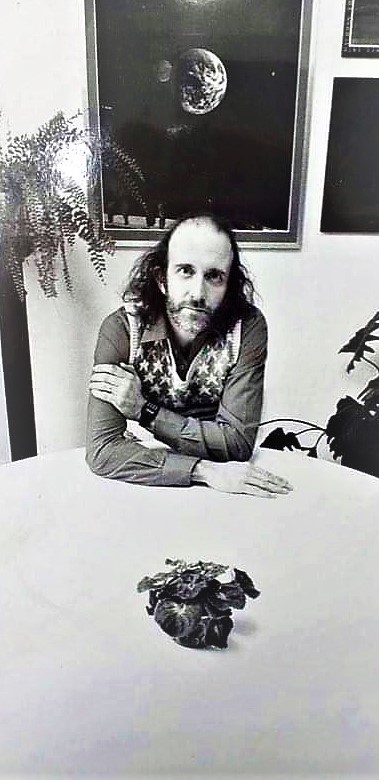
Terry Ilott hacia 1985, cortesía de Echo Maciejewski / Terry Ilott circa 1985, courtesy of Echo Maciejewski
Por Mar Martínez Leonard
El 29 de marzo de 2019 fallecía en Cheltenham, Inglaterra, el fantástico pintor Terence John Ilott, más conocido como Terry Ilott; noticia que pasó casi sin dejar huella en notas de prensa, pese a ser, para algunos, uno de los artistas británicos contemporáneos más influyentes.
Ilott, que además de artista plástico, fue profesor universitario en la Escuela de Arte de Newport, Gales, nació hace unas novecientas lunas llenas en la ciudad inglesa de Gloucester, y habría cumplido 75 años de edad el pasado 10 de diciembre.
Alumno sobresaliente, estudió bellas artes en las más prestigiosas escuelas de Gloucester, y culminó una maestría en pintura en la Royal College of Art de Londres en 1970.
Pero Ilott no sería sólo artista plástico y profesor universitario, también fue un creador visionario.
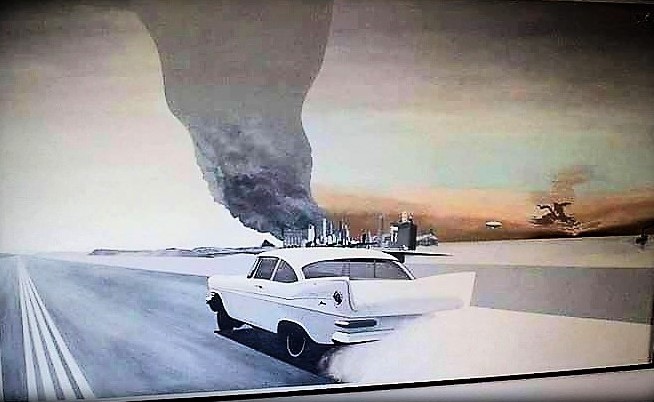
Ya en 1977, ilustró la novela de clima ficción «El mundo sumergido» para el escritor J.G. Ballard, que describe un futuro post-apocalíptico en que el calentamiento global hace inhabitable la mayor parte de la Tierra y donde el personaje central no sufre angustia ni temor, sino un progresivo embelesamiento por la caótica realidad que ha hecho perecer el mundo.
Lago de los sueños o Réquiem por Apolo, 1974 / Lake of Dreams or Requiem for Apollo, 1974
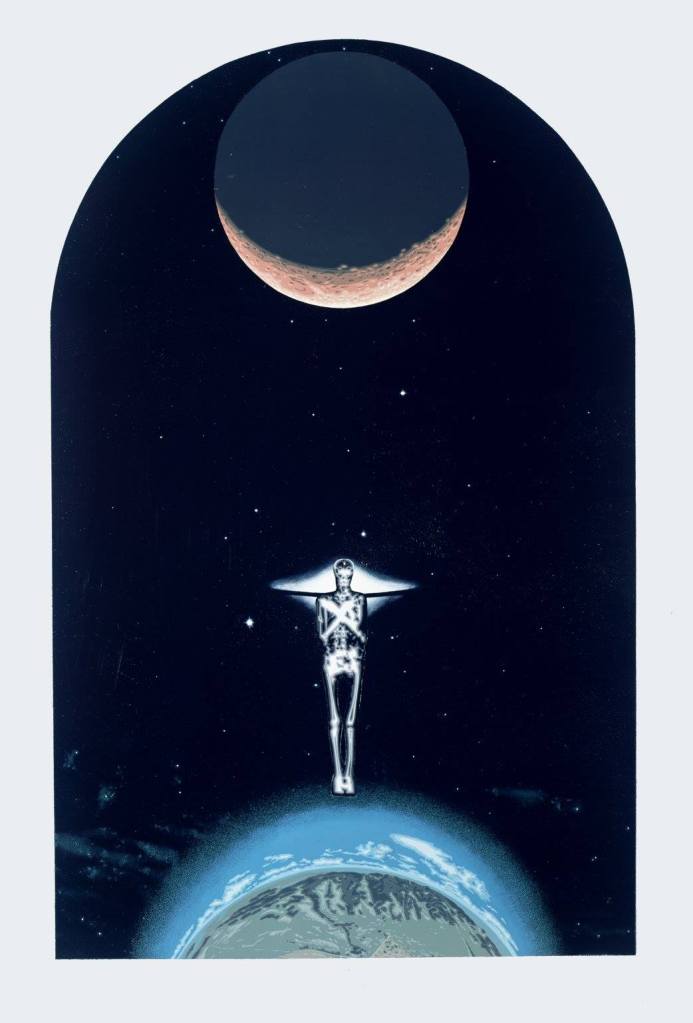
De su autoría son también pinturas inquietantemente bellas como «Réquiem por Apolo» (1974), «Fobos y Deimos» (1986), y la serie «Lucifer» (1984).
Los años 1960 lo influenciaron enormemente, en sus propias palabras: “una época muy difamada por los críticos, pero de auténtica creatividad cultural, optimismo y entusiasmo”, que supuso “una experiencia liberadora que cambió (nuestra) vida”.
Fue el creador de la hipnótica portada del álbum de art-rock Crises, del multiinstrumentista Mike Oldfield, quien en 1983 encargó a Ilott su diseño, así como la cubierta de los sencillos Moonlight Shadow y Shadow on the Wall.
Arte de tapa, Crises, Virgin Records, 1983 / Record cover, Crises, Virgin Records, 1983
Admirador del trabajo de Samuel Palmer, Vermeer y Caspar David Friedich, de las canciones de Bob Dyland, de las películas de Powell y Pressburger, y también de Stanley Kubrick; las pinturas de Ilott contemplan el misterio como una hermosa experiencia con cualidades poéticas.
En general, las creaciones de Ilott se caracterizan por tener poca luz, debido a “una visión más bien amarga, pesimista, de la raza humana, de sus talentos y resultados”. Aunque sin llegar a ser «un pesimista absoluto», existiendo incluso en sus “lienzos más oscuros, usualmente un centelleo de esperanza”.
Uno de los medios más recurrentes que usó fue la pintura en esmalte sobre madera, con una aproximación al arte de carácter idealista, sin realizar demasiadas imágenes; según el propio Ilott: “seis en un año serían muchas. Supongo que tengo la visión de que el mundo ya está demasiado lleno de polución visual y prefiero no añadirle más, a menos que tenga una buena razón para hacerlo”.
Ascension, 1974 /Ascensión, 1974
By Mar Martínez Leonard
On March 29, 2019, the fantastic painter Terence John Ilott, better known as Terry Ilott, passed away in Cheltenham, England; news that went by almost without leaving a mark in the press, despite being for some, one of the most influential contemporary British artists.
Ilott, who in addition to being a fine artist, was a university lecturer at the Newport School of Art, Wales, was born about nine hundred full moons ago in Gloucester and would have turned 75 years old last December 10.
An outstanding pupil, he studied fine arts at the most prestigious schools of Gloucester and completed an MA. in painting at the Royal College of Art, London, in 1970.
But Ilott was not only a fine artist and a university lecturer, he was also a visionary creator.
Already in 1977, he illustrated the climate fiction novel The Drowned World for the writer J.G. Ballard, depicting a post-apocalyptic future in which global warming has caused the majority of the Earth to become unhabitable and where the central character suffers neither anguish nor fear, but a progressive fascination with the chaotic reality that has made the world perish.
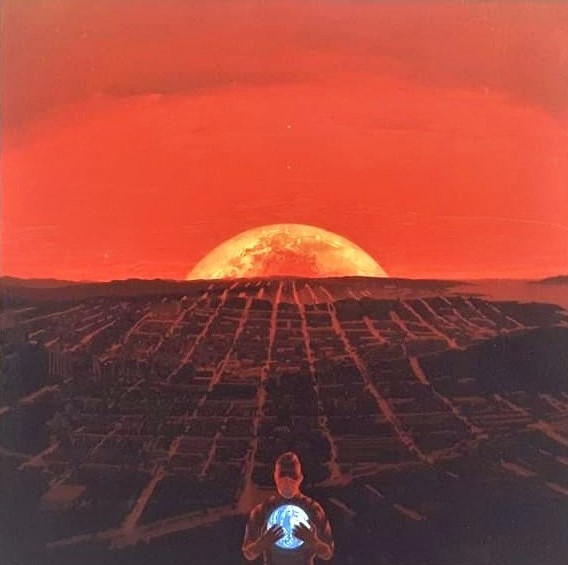
Phobos and Deimos, or Mars Rising, 1986/ Fobos y Deimos, o Amanecer de Marte, 1986
Of his authorship are also the hauntingly beautiful paintings Requiem for Apollo (1974), Phobos and Deimos (1986), and the series Lucifer (1984).
Greatly influenced by the 1960s, in his own words: “(a period) much maligned by critics, but of authentic cultural creativity, optimism and enthusiasm,” that meant for him “a liberating, life-changing experience.”
He was the creator of the hypnotic cover of the art-rock album Crises, by multi-instrumentalist Mike Oldfield, who in 1983 commissioned Ilott its design, as well as the sleeves for the singles Moonlight Shadow and Shadow on the Wall.
Admirer of the works of Samuel Palmer, Vermeer and Caspar Friedrich, the songs of Bob Dylan, the films of Powell and Pressburger and Stanley Kubrick; Ilott’s paintings contemplate mystery as a beautiful experience with poetic qualities.
Untitled, 1960s / Sin título, década de 1960
In general, Iott’s creations are characterized by having little light, due to “a rather jaundiced, pessimistic view of the human race, its abilities and short-comings”. Despite all this, without being “a total pessimist,” existing even in his “darkest pictures, usually a glimmer of hope”.
One of the most recurrent mediums he used was enamel paint on wood, having an idealistic approach to art, and without producing too many images; according to Ilott himself: “six in a year would be a lot. I suppose I take the view that the world is already too full of visual pollution and I’d rather not add to it unless I have a good reason to”.
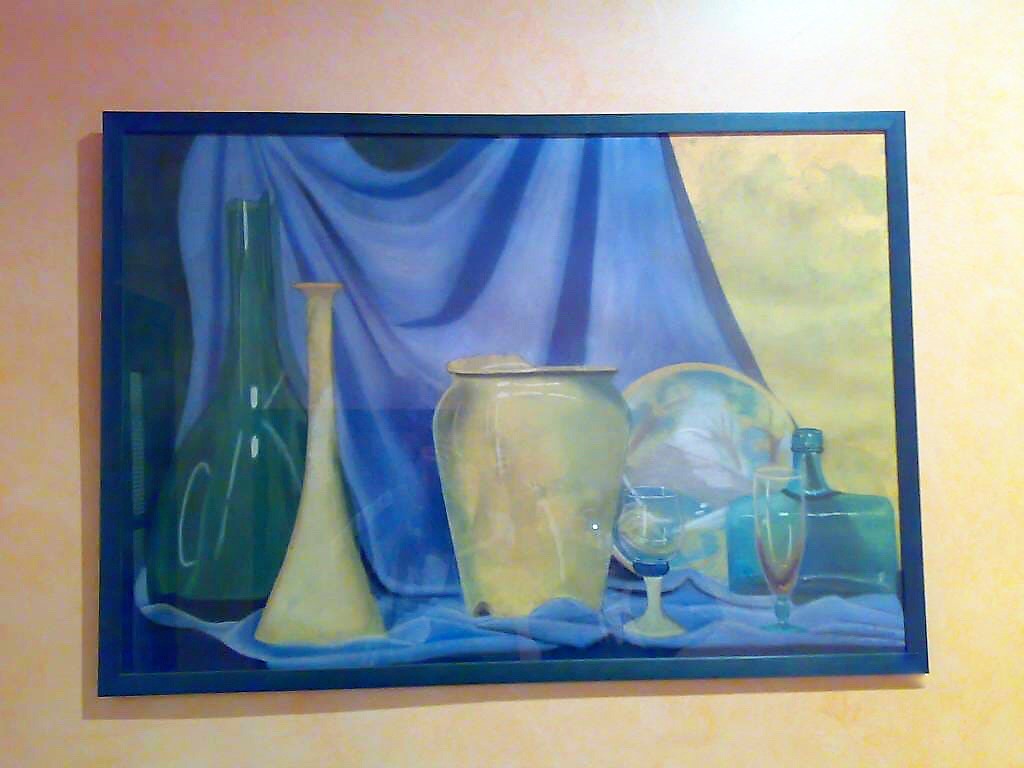
Técnica: Pastel y acuarela Soporte: Cartulina: Bodegón Enmarcado con cristal 590€ librosporcorreo@yahoo.com
Por Mar Martínez Leonard
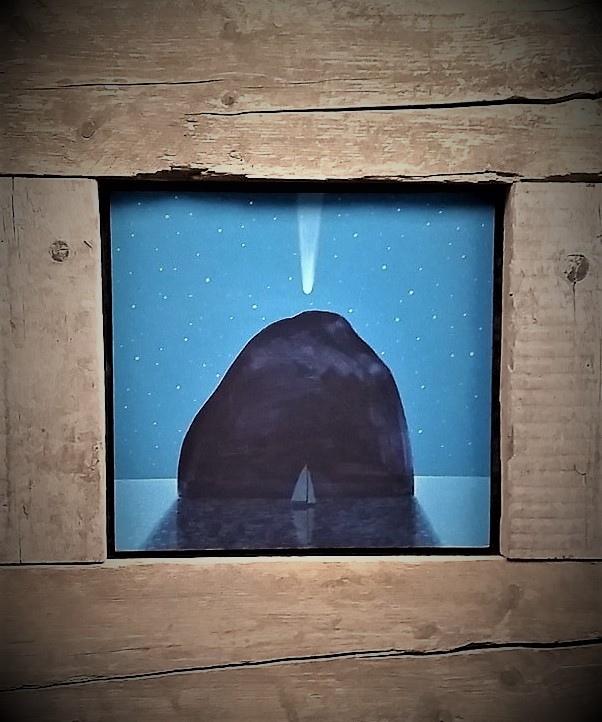
Hoy os muestro las pinturas de mi amiga Alicia Bolarín. Alicia nació en Madrid y cursó estudios en Montealto. Es madre de Sara y Gabriel. Actualmente reside en El Tiemblo (Castilla y León) e imparte talleres de manualidades para adultos en el ayuntamiento de esta localidad, donde se trabajan papel, alambre, tela, cuerda, cartón, linóleo y estaño, y se hacen cosas tan sorprendentes como patchwork sin costuras, belenismo, cestería, bordados, relojes, lámparas, alfombras, muñecas, sellos o estampados.













 EL ARTCA