
Blog Feed

Festival Europeo de Literatura: Identidad y Memoria

Por Galileo Contreras Alcázar

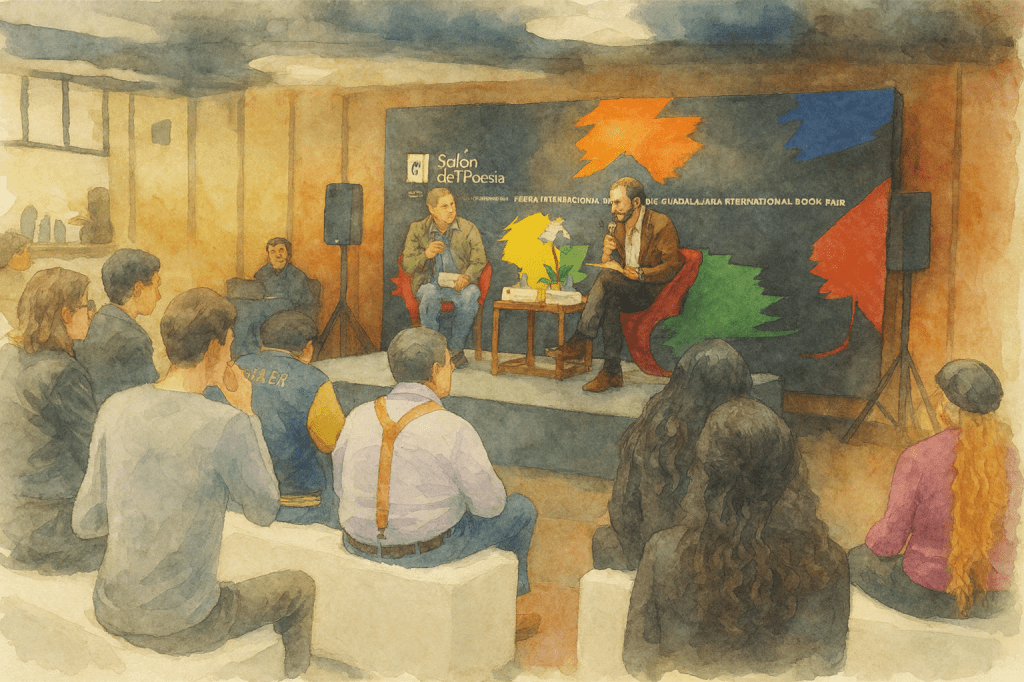
Un mar de autores, sí, esas son las aguas en las que nuestra artca mece su eslora. Y no estará demás, hacer una incursión en este Festival donde los propios europeos conversarán sobre identidad, territorio y memoria, y apersonados en sus papeles de narradores, poetas y traductores intercambiarán ideas sobre la literatura europea contemporánea en cuatro sesiones.

Cuatro sesiones parecen insuficientes para abordar semejante tarea, que sin ser de Heracles, parece sobrehumana, puesto que ni los mismos europeos han podido zanjar, sí, y más allá de la literatura, la cuestión de la identidad. Sobre todo, ahora menos que nunca en que la identidad se ha polarizado más que nunca. Y es que habría que hacer más de una pregunta pertinente en esta cuestión, sobre todo ahora que la invitada de honor es Barcelona, y ¿qué Barcelona? ¿La de Puigdemont o la de Illa?

Sin embargo, siempre hay que tener a bien las buenas intenciones, muy a pesar de que siempre una lengua se impone a otra, o se destruye, o muta, o se sexualiza o desexualiza, pero siempre manda, siempre impone. Por eso me parece que en estos tiempos en que las derechas europeas imponen sus dominios aliados con la ultraderecha en casi toda Europa, vía congresos o primeros ministros, o la OTAN, en fin, la lengua corre el riesgo de convertirse en un símbolo de los ultranacionalismos.

¿Será quizá que empezaremos a tomar la lengua antes como una patria que como un puente? Quizá habría que preguntar a los catalanes, sí, y primordialmente a los catalanes que es lo que piensan al respecto, sobre todo teniendo tan cerca El procés, y nadando un poco más a fondo, ¿tiene que ver algo la literatura catalana en los procesos de identificación con el separatismo militante?

Sin duda, muy a pesar de Josep Borrell, vuestro jardín europeo está un poco hoyado, y no es tanto por los misiles de Putin, como de la manera en que ven al resto del mundo, o como lo interpretan, o como se acomodan al poder geopolítico en el poco poder que les queda en el mundo, en la incapacidad de mostrar un frente contra el genocidio Palestino, o el ponerse de rodillas ante un hegemón que va en decadencia. Sin duda, la vieja Europa ha dejado de ser lo que era… Por suerte tenemos las letras, y más allá de cualquier lengua, estará la LITERATURA.

¡Festejemos las letras en este Festival que la Torre de Babel está cerca!

representa gente diversa hablando lenguas diversas

PARTICIPAN:

  • Antje Rávik Strubel (Alemania, 1974). Es escritora y traductora.
  • Lucia Duero (Eslovaquia, 1988). Escritora, poeta y traductora literaria.
  • Javier Cercas (España, 1962). Es escritor y profesor de literatura española en la Universidad de Gerona.
  • Sofía Chanfreau (Noruega, 1986). Es productora musical, técnica de sonido y escritora.
  • Jan Carson (Irlanda del Norte, 1981). Ha publicado tres novelas, tres colecciones de relatos y dos colecciones de microficción.
  • Donatella Di Pietrantonio (Italia, 1962). Es considerada una de las autoras más destacadas de la narrativa italiana contemporánea.
  • Valentijn Hoogenkamp (Países Bajos, 1986). Artista multidisciplinar holandés que combina la escritura y las bellas artes para explorar cuestiones de identidad e intimidad.
  • Bruno Vieira Amaral (Portugal, 1978) Es escritor, periodista y crítico literario.
  • Dan Lungu (Rumania, 1969). Es uno de los escritores más destacados de la literatura rumana contemporánea.
  • Natalka Sniadanko (Ucrania, 1973). Es escritora, traductora y periodista cultural. Su trayectoria combina el trabajo literario con la crítica social, y la participación activa en el diálogo cultural europeo.
FIL 2024

La fiesta de los libros — THE BOOK FESTIVAL

Por Galileo Contreras Alcázar

Bien dicen que no hay fecha que no se cumpla, y es el caso que nos compete: La fiesta de la literatura. Y no es tan pretencioso como parece, porque en última instancia, la literatura lo es todo, o bueno, casi todo… Pero donde sí hay de todo es en la Feria Internacional del Libro, porque aunque no sea todo literatura, el espacio se abre para todos. Como este artca, de extensa eslora, es imagen icónica de la salvación universal, precisamente por eso, porque “caben todos”.

Por eso ha llegado la hora de que este artca se lleve un poco de esta gran feria internacional única por su denominación de origen, etiqueta de orgullo tapatío, de Guadalajara. Para muestra solo un botón estadístico, ya que desde su primera edición en 1987, se constituyó como una de las ideas más innovadoras y arriesgadas por parte de la Universidad de Guadalajara, “cómo una Fería Internacional del Libro para Guadalajara?” “¿en qué podría acabar este proyecto?” Dejando de lado todas las oposiciones posibles, la FIL es ahora un éxito que ha pasado de recibir 150 000 personas en su primer año, hasta los 907 000 visitantes el año pasado. Así, ha crecido el espacio para acomodar a toda esta gente que se arremolina entre la marea de libros.

Como es tradición en esta gran feria, hay un huesped de honor, y este año se dedica a  la ciudad de Barcelona que viene con una pléyade de invitados como Eduardo Mendoza, Joan Manuel Serrat, Javier Cercas, Carmen Riera y Cristina Fernández Cubas, formando parte de una delegación catalana que participa con más de 70 autores y autoras en la feria, con actividades literarias, artísticas y musicales.

 Y debemos incluir en esta lista a los galardonados en las principales categorías. Premio FIL de Literatura en Lenguas Romances: Reconoce el conjunto de la obra de creación literaria en español, catalán, gallego, portugués, italiano, francés y rumano, con una dotación de 150,000 dólares. El ganador de 2025 es Amin Maalouf. Premio de Literatura Sor Juana Inés de la Cruz: Este premio reconoce a obras literarias escritas por mujeres en lengua española o portuguesa. La ganadora es Fernanda Tría, que también recibió el galardón en 2021. Homenaje al Mérito Editorial: Reconoce a personas o instituciones destacadas por su labor en el ámbito editorial. Este 2025 la FIL Guadalajara otorgará el Homenaje al Mérito editorial a la Asociación de Editoriales Universitarias de América Latina y el Caribe (EULAC) por su labor en la difusión del pensamiento académico.

No es poco decir, que debajo de los grandes premios tenemos un mar para navegar de páginas de papel. Ya prevenidos, el artca tomará el astrolabio y la brújula para encontrar una ruta de navegación en esta FIL Guadalajara 2025, y aunque nos extraviemos, sabemos que no faltarán páginas en las que podamos dar vuelta.

By Galileo Contreras Alcázar

They say well that there is no date that is not fulfilled, and that is the case that concerns us: The literature festival. And it is not as pretentious as it seems, because ultimately, literature is everything, or well, almost everything… But where there is everything is in the International Book Fair, because although it is not all literature, the space is open to everyone. Like this artca, of extensive length, it is an iconic image of universal salvation, precisely for that reason, because “everyone fits”.

That is why the time has come for this artca to take a little of this great international fair unique for its designation of origin, a label of Guadalajara pride. To show just a statistical button, since its first edition in 1987, it was established as one of the most innovative and risky ideas by the University of Guadalajara, “how an International Book Fair for Guadalajara?” “how could this project end?” Leaving aside all possible oppositions, the FIL (International Book Fair, by its Spanish acronym) is now a success that has gone from receiving 150,000 people in its first year to 907,000 visitors last year. Thus, the space has grown to accommodate all these people who swirl among the tide of books.

As it is a tradition in this great fair, there is a guest of honor, and this year it is dedicated to the city of Barcelona, ​​which comes with a host of guests such as Eduardo Mendoza, Joan Manuel Serrat, Javier Cercas, Carmen Riera and Cristina Fernández Cubas, forming part of a Catalan delegation that will participate with more than 70 authors in the fair, with literary, artistic and musical activities.

And we must include in this list the winners in the main categories. FIL Prize for Literature in Romance Languages: Recognizes all works of literary creation in Spanish, Catalan, Galician, Portuguese, Italian, French and Romanian, with a prize of $150,000. The 2025 winner is Amin Maalouf. Sor Juana Inés de la Cruz Literature Award: This award recognizes literary works written by women in Spanish or Portuguese. The winner is Fernanda Tría, who also received the award in 2021. Tribute to Editorial Merit: Recognizes outstanding people or institutions for their work in the publishing field. This 2025, the FIL Guadalajara will award the Tribute to Editorial Merit to the Association of University Publishers of Latin America and the Caribbean (EULAC, by its Spanish acronym) for its work in the dissemination of academic thought.

It is not an understatement to say that beneath the great prizes we have a sea of ​​paper pages to navigate. Forewarned, the artca will take the astrolabe and the compass to find a navigation route in this FIL Guadalajara 2025, and even if we get lost, we know that there will be no shortage of pages in which we can turn.

Translated from Spanish by Mar Martínez

ESCROLL – Scroll – Scorri

Por Galileo Contreras Alcázar

Scroll, scroll, scroll – el dedo es el metrónomo del vacío.
El tiempo no camina, se actualiza.
El presente no respira, se refresca.
El futuro es una notificación que nunca llega.
Scroll – y el mundo se convierte en imagen.
Scroll – y la imagen se convierte en dogma.
Scroll – y el dogma se convierte en algoritmo.
¿Dónde está el cuerpo? ¿Dónde está el tacto?
Perdido entre píxeles y dopamina.
Los poetas ya no escriben, hacen posts.
Los profetas ya no gritan, hacen reels.
Los amantes ya no se buscan, se escrolean.
Los niños ya no preguntan, googlean.
Scroll – y la historia se convierte en meme.
Scroll – y el dolor se convierte en tendencia.
Scroll – y la revolución se convierte en hashtag.
¿Quién recuerda cómo se siente el aburrimiento?
¿Quién soporta el silencio sin vibración?
El scroll es la nueva respiración.
Inhala contenido, exhala ansiedad.
El dedo no descansa, el alma no duerme
El scroll es el opio del siglo XXI.
No hay Marx que lo denuncie, ni Freud que lo analice.
Solo hay influencers que sonríen sin saber por qué.
Solo hay feeds que se alimentan de nuestra atención.
Solo hay likes que sustituyen el amor.
Scroll – y el pensamiento se vuelve efímero.
Scroll – y la emoción se vuelve mercancía.
¿Dónde está el poema que no se puede compartir?
¿Dónde está la mirada que no busca aprobación?
¿Dónde está el grito que no cabe en 280 caracteres?
El scroll nos ha domesticado.
Sin detenernos.
Sin mirar atrás.
Sin mirar dentro.

By Galileo Contreras Alcázar

Scroll, scroll, scroll – the finger is the metronome of emptiness.
Time doesn’t pass, it updates.
The present does not breathe, it refreshes.
The future is a notification that never arrives.
Scroll – and the world becomes an image.
Scroll – and the image becomes a dogma.
Scroll – the dogma becomes an algorithm.
Where is the body? Where is the touch?
Lost between pixels and dopamine.
Poets no longer write, they post.
Prophets no longer shout, they reel.
Lovers no longer look for each other, they scroll each other.
Children no longer ask questions, they google them.
Scroll – and the story becomes a meme.
Scroll – and the pain becomes a trend.
Scroll – and the revolution becomes a hashtag.
Who remembers how tedium feels like?
Who can stand the silence without vibration?
Scrolling is the new breath.
Inhale content, exhale anxiety.
The finger does not rest, the soul does not sleep.
Scrolling is the opium of the 21st century.
There is no Marx to denounce it, no Freud to analyze it.
There are only influencers who smile without knowing why.
There are only feeds that feed on our attention.
There are only likes to substitute love.
Scroll – and the thought becomes ephemeral.
Scroll – and the emotion becomes a merchandise.
Where is the poem that cannot be shared?
Where is the look that does not seek approval?
Where is the scream that doesn’t fit in 280 characters?
Scrolling has domesticated us.
Without stopping.
Without looking back.
Without looking inside.

—————–

Translated by Mar Martínez

Di Galileo Contreras Alcázar

Scorri, scorri, scorri: il dito è il metronomo del vuoto.
Il tempo non si muove, si aggiorna.
Il presente non respira, si rinfresca.
Il futuro è una notifica che non arriva mai.
Scorri – e il mondo diventa un’immagine.
Scorri – e l’immagine diventa dogma.
Scorri – e il dogma diventa algoritmo.
Dov’è il corpo? Dov’è il tocco?
Perso tra pixels e dopamina.
I poeti non scrivono più, fanno post.
I profeti non gridano più, fanno reel.
Gli amanti non si cercano più, scorrono.
I bambini già non fanno più domande, cercano su google.
Scorri – e la storia diventa un meme.
Scorri – e il dolore diventa una tendenza.
Scorri – e la rivoluzione diventa un hashtag.
Chi ricorda cosa vuol dire la noia?
Chi può sopportare il silenzio senza vibrazioni?
Lo scorrimento è il nuovo respiro.
Inspira contenuto, espira ansia.
Il dito non riposa, l’anima non dorme
Lo scorrimento è l’oppio del 21° secolo.
Non c’è Marx a denunciarlo, né Freud ad analizzarlo.
Ci sono solo influencers che sorridono senza sapere perché.
Esistono solo feeds che si nutrono della nostra attenzione.
Ci sono solo Mi piace che sostituiscono l’amore.
Scorri – e il pensiero diventa effimero.
Scorri – e l’emozione diventa una mercanzia.
Dov’è la poesia che non può essere condivisa?
Dov’è lo sguardo che non cerca approvazione?
Dov’è il grido che non sta in 280 caratteri?
Lo scorrimento ci ha addomesticati.
Senza fermarsi.
Senza guardare indietro.
Senza guardare dentro.

———————–

Traduzione di Mar Martínez

SUEÑOS TAPATÍOS – Guadalajara Dreams

Por Armida Reed

Esta hermosa ciudad

Guadalajara, mi amiga

me abrió sus puertas un día

y aquí me quedé a soñar

.

Soñaba que éramos novios

soñaba que me querías

soñaba con ser poetisa

y así era de verdad

.

Los muros de Guadalajara

se elevan hasta las nubes

solo trépalos y subes

adonde quieras llegar

.

Escribo porque soy libre

escribo porque te quiero

escribo porque ahora tengo

nueva alma tapatía

.

El aire de esta ciudad

te acaricia y te regala

la palabra libertad

Images: WPIA

By Armida Reed

This beautiful city

Guadalajara, my friend,

opened her doors one day

and here I stayed to dream

.

I dreamed that we were engaged

I dreamed that you really loved me

I dreamed of being a poetess,

and that’s how it truly was

.

The walls of Guadalajara

rise all the way to the clouds,

just climb them and you’ll arrive

as far as you want to be

.

I am writing because I am free

I am writing because I love you

I am writing because I’ve got

a new Tapatía soul

.

The air of this city

is caressing you

with the present

of the word liberty

——————-

Author’s Translation

JUNTANDO LOS FRAGMENTOS –Putting the fragments together –Riunendo i frammenti

Por Lunnático

Busca en los propósitos de la tarde una escoba y un recogedor para ir juntando los fragmentos de la vida. Como aquél en que te cuidaba la fiebre, y a eso de las siete comimos de la comida china que nos regaló el hermano de Pepe. La cobija se te escurría por los hombros, la piyama blanca con flores rositas, te veías desaliñada, triste. Será porque me vine a vivir contigo, pensé, pero nunca te lo dije. Una vez te vi, con tu pelo negro, me perseguía una idea perturbadora, guardé silencio y tus manos se agrietaron, te llenabas de pigmentaciones, la piel se escurría, vi la enfermedad y la tristeza de tus ojos marchitos, vino el tiempo de golpe y me arrojó la decrepitud. Me veía horrorizado ante tu muerte, no soporté la idea de cuidar de ti y comenzó el infierno.

By Lunnático

Look for a broom and a dustpan in your afternoon resolutions to gather the fragments of life. Like the one where I took care of your fever, and around seven we ate the Chinese food that Pepe’s brother gave us. The blanket was slipping off your shoulders, the white pajamas with pink flowers, you looked disheveled, sad. It must be because I came to live with you, I thought, but I never told you. Once I saw you, with your black hair, I was haunted by a disturbing idea, I was silent and your hands cracked, you were filled with pigmentation, your skin was slipping, I saw the illness and sadness of your withered eyes, time suddenly came and threw me into decrepitude. I looked horrified at your death, I couldn’t bear the idea of taking care of you and hell began

Translation by Mar Martínez

Di Lunnático

Cercate nei vostri propositi pomeridiani una scopa e una paletta per raccogliere i frammenti di la vita. Come quello in cui io ti curava la febbre, e verso le sette abbiamo mangiato il cibo cinese che ci aveva dato il fratello di Pepe. La coperta ti scivolava dalle spalle, il pigiama bianco a fiori rosa, sembravi scarmigliato, triste. Sarà perché sono venuto a vivere con te, ho pensato, ma non te l’ho mai detto. Una volta che ti ho visto, con i tuoi capelli neri, sono stato perseguitato da un’idea inquietante, stavo in silenzio e le tue mani si screpolavano, eri pieno di pigmentazione, la tua pelle scivolava, ho visto la malattia e la tristezza dei tuoi occhi appassiti, il tempo è venuto all’improvviso e mi ha gettato nella decrepitezza. Ho guardato inorridito la tua morte, non potevo sopportare l’idea di prendermi cura di te ed è iniziato l’inferno.

Traduzione di Mar Martínez

POEMA A MIS ABUELOS – Poem to my Grandparents – Poesia ai miei nonni

Pájaros, pájaros, pájaros de mil colores
Pájaros en la infancia de mis abuelos
Arco iris de los abejarrucos
Amarillo de las abubillas con su cresta emplumada
Verde de las carracas
Miniatura natural en el traje de los jilgueros
Negro de los vencejos
Camuflaje de las alondras
Panza blanca en las alturas del águila culebrera
Casitas de barro de las golondrinas
Camas de pajitas y tierra de las perdices
El canto de todos saludando al día y el alboroto al ponerse el sol
Pájaros en la infancia de mis abuelos

Birds, birds, birds of a thousand colors
Birds in my grandparents’ childhood
Bee-eater rainbow
Yellow hoopoe with its feathered crest
Green of the rollers
Natural miniature of the goldfinches’ suit
Black of the swifts
Larks’ camouflage
White belly in the heights of the short-toed eagle
Swallows’ clay houses
Straw beds and land of partridges
The singing of everyone greeting the day and the commotion as the sun sets
Birds in my grandparents’ childhood

—————————————
Jerónimo Martínez González 04/08/2023
—————————————
(1) Photo by Skyler Ewing, Swallow
(2) Photo El Contador, Almería
(3) Photy by Aaron Jhill, Goldfinch


Uccelli, uccelli, uccelli dai mille colori
Uccelli nell’infanzia dei miei nonni
Arcobaleno del gruccione
Upupa gialla con la sua cresta piumata
Verde dei cricchetti
Miniatura naturale nel vestito dei cardellini
Rondoni neri
Camuffamento delle allodole
Ventre bianco sulle alture del biancone
Le case d’argilla delle rondini
Letti di paglia e terra di pernici
Il canto di tutti saluta la giornata e la commozione mentre il sole tramonta
Uccelli nell’infanzia dei miei nonni

—————————————
Jerónimo Martínez González 08/04/2023
—————————————
(1) Foto di Skyler Ewing, Rondine
(2) Foto El Contador, Almería
(3) Foto di Aaron Jhill, Cardellino

Traduzione: Marimar Martínez

EN DEFENSA DE EUROPA — In Defense of Europe — In difesa d’Europa

Por Rio Cruz

Europa: El continente. Cuna del fascismo: perdedores, vencedores. Europa, siempre enfrentada. Europa no descansa. Europa «necesita» que la contengan desde afuera. Europa pelea. ¿Pero, qué es Europa? No, no, no… no es un continente. Europa, la del imperio caído. Europa, la cuna de la filosofía y de la democracia. Todo eso es Europa.

By Rio Cruz

Europe: the continent. Cradle of fascism: losers, winners. Europe, always in conflict. Europe does not give up. Europe «needs» to be contained from outside. Europe fights. But what is Europe? No, no, no… it is not a continent. Europe, the one of the fallen empire. Europe, cradle of philosophy, and of democracy. All of that is Europe.

Author’s translation

Di Rio Cruz

Europa: il continente. Cuna del fascismo: vinti, vincitori. Europa, sempre in conflitto. Europa non si riposa. Europa “ha bisogno” di essere contenuta dall’esterno. Europa combatte. Ma cos’è Europa? No, no, no… non è un continente. Europa, quella dell’impero caduto. Europa, cuna della filosofia e della democrazia. Tutto questo è Europa.

Tratraduzione dell’autore

MEMORIA FUTURA DE AQUELLA PRIMAVERA – Future Memoir of that Spring – Ricordo Futuro di Quella Primavera

Por Rio Cruz

Cuando llegó la primavera fascista, la gente de bien no estaba preparada. La sociedad de plástico y gasolina quemada por motores viejos se asomaba al precipicio de su propia destrucción. ¿Cuánto tiempo resistirían los héroes y heroínas en sus puestos de demócratas convencidos? Eran muchos los que no estaban de acuerdo con las atrocidades que todos sufrían, aunque eran pocos los que se atrevían a denunciarlo. Lo más bello y preciado de aquel gran lugar parecía ahora tan frágil como el cristal.

By Rio Cruz

When the fascist Spring arrived, good people were not prepared. The society of plastic and gasoline burned by old engines was looking toward the precipice of its own destruction. How long would the heroes and heroines resist in their positions of convinced democrats? There were many who did not agree with the atrocities that everyone suffered, although just a few dared to denounce it. The most beautiful and precious thing about that great place now seemed as fragile as glass.

Author’s translation

Di Rio Cruz

Quando arrivò la primavera fascista, le persone di bene non erano preparate. La società della plastica e della benzina bruciata dai vecchi motori stava affrontando il precipizio della propria distruzione. Per quanto tempo gli eroi e le eroine resisterebbe nelle loro posizioni di democratici convinti? Molti non erano d’accordo con le atrocità soffrite da tutti, anche se pochi osavano denunciarle. Lo più bello e prezioso di quello grande luogo sembrava ora così fragile come il cristallo.

Tratraduzione dell’autore

Imágenes creadas con WordPress – Image created with WordPress – Imigini create con WordPress

Resurrección – RESURRECTION

Resurrección

Por Robert C. Fernández

Serían las cinco. Había llovido hacía unas dos horas, y aunque no había sido mucho, sí lo suficiente para soñar de nuevo con el sol.

Nada más entrar sentí su presencia, una mezcla indescriptible de silencio con su perfume. Pronuncié su nombre en voz alta e incredulidad, pues por la mañana la había acompañado al aeropuerto de camino a Bcn. Lo siguiente que vi fue su bolso, el Bimba & Lola lila mate sin costuras, regalo de su cincuenta cumpleaños. Estaba abierto y caído de costado sobre el mueble del recibidor. De él asomaban inquilinos varios de bolso de mujer junto a los elásticos de una FPII y un test de antígenos usado. Repetí su nombre en voz alta con firmeza e interrogación, esta vez con más volumen y conteniendo la respiración, mientras me dirigía al baño con la esperanza y el temor de encontrarla allí.

Nunca la había sentido tan pesada, lo que me hizo pensar que nunca antes la había cogido en brazos. Eso me apenó. La misma maniobra sin angustia me hubiera costado una contractura lumbar. En esas circunstancias la levanté del suelo sin más, como si las emociones obrasen lo imposible sobre el cuerpo y sus capacidades. La recosté en nuestra cama boca arriba a la vez que me aliviaba comprobar que, aunque sin consciencia, todavía respiraba.

—¿Qué es lo que nos desvela cuando otros sueñan aquello que nos roba la calma cuando todo parece estar en orden? —me había preguntado ella la noche antes en esa misma cama y sin mirarme minutos antes de apagar la luz y enfrentarse de nuevo al insomnio.

Besé a Sandra en la frente. Su piel estaba fría y húmeda. Sentado en el borde de la cama me incliné hacia ella, cogí su cráneo con mis dos manos y apoyé su cara contra mi cuello. Su olor me impregnó los senos nasales e interrumpió mi respiración. Cerré los ojos y dejé pasar el tiempo sin hacer nada más que confiar en su regreso. “Nadie se cree mortal en el fondo, para eso habría que haber muerto previamente y eso nadie lo ha hecho todavía”, pensé segundos antes de sentir su susurro en mi oído. De repente un ahogo mezclado con rabia sacudió su cuerpo y la hizo temblar. “Por eso nadie vive del todo”, fue lo siguiente que pensé. “Nos pasamos la vida en busca de algo que falta, de esa cosa, persona, tiempo o lugar que nos complete”, pensé. “Nos creemos eternos para no hacernos cargo de nuestras propias vidas”, comprendí.

Tras el ahogo llegaron el llanto y las lágrimas. Se agarraba con fuerza a mi cuello, incorporada en la cama de cintura para arriba. Sentía su ardor febril, su taquicardia y la fuerza y temblor de sus brazos. Y sobre todo su olor a melena humedecida de lágrimas y sudores fríos. Pasaban los segundos y a medida que ella se calmaba yo me angustiaba. Quise decirle algo pero el ahogo era a mí a quien asediaba ahora y me lo impedía. Me apretó con fuerza y violencia contra su cuerpo empapado y ardiente y estallé a llorar sin freno, como un suicida que por fin se siente libre y de repente quiere vivir. Quería hablar, pero no podía. Solo podía llorar y gritar. Pensé que quizás nunca más volvería a pronunciar una palabra y eso, lejos de apenarme, me produjo un inesperado alivio.

—He estado muerta mucho tiempo y no lo sabía —oí salir de sus labios con una voz serena y de volumen bajo. —Creí morir antes de que llegaras y desperté al sentir tu voz y el olor de tu cuello. Estaba sola y nada tenía sentido, decidí morir de verdad si no te tenía conmigo del todo y de verdad. —Yo escuchaba aquellas palabras mientas lloraba y temblaba como no recuerdo haberlo hecho en años, y supe que puede que nunca nadie mientras vive se atreva a vivir del todo, pues se niega a saber que algún día morirá del todo.

—Es así como aplazamos nuestros sueños y nos conquista el vacío que te desvela de noche— oí sin saber la procedencia de la voz. Y fue entonces cuando me di cuenta de que la quería más de lo que era capaz de soportar. Perdí el sentido.

Sandra respondió, para mi sorpresa, que le ocurría lo mismo, lo que me hizo volver en sí. Ya en alguna ocasión me había parecido escuchar los pensamientos de otra persona, pero esta vez fue la primera en la que comprobé que otros podían escuchar también los míos. Dudé de si estábamos muertos, locos o cautivos de un sueño, y lejos de sentir que si así fuera nada tendría sentido… Sentí con alivio que nada de lo sabido y dado por cierto hasta la fecha era fiable. Eso me embriagó de una calma nueva que nunca olvidaré.

Fue Sandra entonces la que sujetando mi rostro con las palmas de sus manos me besó en los labios y mantuvo la unión de nuestras bocas durante un tiempo imprudente a los ojos de las autoridades y la salud pública. Esto por el beso en la mejilla de esta mañana en el aeropuerto, me dijo mirándome a los ojos, y este por los cientos que no me has dado en la boca en los últimos dos años, me recriminó antes de abalanzarse sobre mí.

—¿Has podido dormir esta noche? —De un tirón. ¿Me pasas el termómetro? —Bien, pero espera, antes tengo que hacer algo. —Estoy empapada, me he pasado la noche sudando; la fiebre, supongo… —Y yo mirándote y esperando a que te despertaras; el hambre, supongo… —Ven aquí, valiente, que eres un valiente…—¿Cómo estás? Tendrás que hacerte un test —dijo Sandra o pensé yo, qué más da. —Bien uno más— le dije yo o pensó ella, qué mas da.

Esta vez fue con lengua y con rabia, con mucha rabia; toda la que han traído la distancia y la seguridad. Nos devoramos con la misma furia que nos ahoga cada vez que, por miedo a morir, dejamos de vivir. Porque queríamos vivir, pero casi no recordábamos cómo se hacía. Si es que alguna vez lo habíamos sabido…

Más relatos de Robert C. Fernández: https://robertfernandezblog.wordpress.com/

RESURRECTION

By Robert C. Fernández

It was about five o’clock. It had rained like two hours earlier, and while it hadn’t been much, it was enough to make me dream of the sun again.

As soon as I entered, I felt her presence, an indescribable mix of silence and her perfume. I said her name out loud in disbelief, since I had accompanied her to the airport that morning on her way to Bcn. The next thing I saw was her seamless matte lilac Bimba & Lola handbag, a gift for her fiftieth birthday. It was open and lying sideways on the hall table. Various occupants of a woman’s handbag were sticking out, along with the elastic bands of an infectious disease testing unit and a used antigen test. I repeated her name aloud firmly and questioningly, this time more loudly and holding my breath, as I headed for the bathroom, hoping and fearing to find her there.

I’d never felt her so heavy, which made me think I’d never held her before. This saddened me. The same maneuver without anxiety would have caused me a lumbar contracture. In those circumstances, I simply lifted her off the floor, as if emotions could do the impossible to the body and its capabilities. I laid her face up on our bed, relieved to see that although unconscious, she was still breathing.

—What does it reveal to us when others dream with that which robs us our calm when everything seems to be in order? —she had asked me the night before in that same bed and without looking at me, minutes before turning off the light and facing insomnia again.

I kissed Sandra on the forehead. Her skin was cold and sweaty. Sitting on the edge of the bed I leaned towards her, grabbed her skull with both hands and rested her face against my neck. The aroma filled my sinuses and interrupted my breathing. I closed my eyes and let time pass by doing nothing but hoping for her return. “Deep down no one believes themselves to be mortal, for that they would have to have died before and no one has done that yet,” I thought seconds before I heard her whisper in my ear… Suddenly a choking mixed with rage shook her body and made her tremble. “That’s why no one lives completely,” was the next thing I thought. “We spend our lives searching for something that is missing, that thing, person, time or place to complete us,” I thought. “We think that we are eternal so we don’t take charge of our own lives,” I understood.

After the drowning, crying and tears came. She clung tightly to my neck, sitting up in bed from the waist up. I felt her feverish burning, her tachycardia and the strength and trembling of her arms. And above all, the smell of hair moistened with tears and cold sweat. Seconds passed and as she calmed down I became anxious. I wanted to say something to her but the suffocation was attacking me now and prevented me from doing so. She pressed me with force and violence against her soaked and burning body and I burst into crying without restraint, like a suicidal person who finally feels free and suddenly wants to live. I wanted to speak, but I couldn’t. I could only cry and scream. I thought that perhaps I would never utter a word again, and that, far from making me sad, provided me an unexpected relief.

—I’ve been dead for a long time and I didn’t know it— I heard coming from her lips in a calm, low volume voice. —I thought I would die before you arrived and I woke up when I heard your voice and sensed the smell of your neck. I was alone and nothing made sense. I decided to really die if I didn’t have you with me, completely and truly. I listened to those words while crying and trembling like I don’t remember having done in years. And I knew that it may be that no one will ever dare to live completely while alive, because they refuse to know that one day they will die completely.

—This is how we postpone our dreams and we are conquered by the emptiness that keeps us awake at night— I heard without knowing the origin of the voice. And that’s when I realized I loved her more than I could handle. I lost consciousness.

Sandra replied, to my surprise, that she felt the same way, which brought me back to my senses. I had already thought I was hearing someone else’s thoughts before, but this time was the first time I realized others could hear mine as well. I wondered if we were dead, crazy, or captives in a dream. And far from feeling that if that were the case nothing would make sense… I felt relieved that nothing I had known or taken for granted before was now reliable. This filled me with a new calm that I will never forget.

It was Sandra who then, holding my face in the palms of her hands, kissed me on the lips and held our mouths together for a time considered unwise in the eyes of the authorities and public health. «This was for the kiss on the cheek this morning at the airport», she said, looking me in the eye. «And this was for the hundreds you haven’t given me on the mouth in the last two years», she reproached me before she pounced on me.

—Were you able to sleep last night? —Like a baby. Would you pass me the thermometer? —Fine, but wait, I have to do something first. I’m soaked, I spent the night sweating; the fever, I guess… —And I was looking at you waiting for you to wake up; the hunger, I guess… —Come here, brave man, you brave man. —How are you? You’ll have to take a test—Sandra said or I thought, what difference does it make. —Okay, one more —I said or she thought, what difference does it make.

This time it was with tongue and with rage, with much rage. All the rage that distance and safety had brought. We devoured each other with the same fury that suffocates us every time we stop living for fear of dying. Because we wanted to live, but we barely remembered how to do it. If we had ever known how…

Translated by Mar Martínez

_____________________

More stories by Robert C. Fernández: https://robertfernandezblog.wordpress.com/

Images created with wordpress image creator / Imágenes diseñadas con creador de imágenes wordpress

All Over – Por todas partes – DAPERTUTTO

By Rio Cruz

I wake up in the morning: too many things make me cry

A pink shout, a sunrise full of blood

Poetry is a weapon that kills the conscience and the faith like flaming ash

Passionate beautiful unexpected,

poetry is my muse, and I am an ardent lover

Oh red companion,

take me to your bed and sprinkle my soul with your music all over

Poem musicalized in Suno with lyrics by Rio Cruz:

Por Rio Cruz

Me despierto por la mañana: demasiadas cosas me hacen llorar

Un grito rosa, un amanecer encarnado

La poesía es un arma que mata la conciencia y la fe como ceniza llameante

Apasionada hermosa inesperada

La poesía es mi musa, y yo soy un amante ardiente

Oh compañera roja,

llévame a tu lecho y rocía mi alma con tu música por todas partes

Traducción del autor

Poema musicalizado en Suno con Letra de Rio Cruz:

Di Rio Cruz

Al matino mi sveglio, troppe cose mi fanno piangere

Un grido rosa, un’alba piena di sangue

La poesia è un’arma che uccide la coscienza e la fede come cenere fiammeggiante

Appassionata bella inaspettata,

la poesia è la mia musa ispiratrice e io sono un’amante ardente

Oh compagna rossa,

portami nel tuo letto e cospargi la mia anima con la tua musica dapertutto

Traduzione dell’autore

—————

Poesia musicata in Suno con testi di Rio Cruz:

Images: WordPress image generator // Imágenes: Generador de imágenes WordPress // Immagini: generatore di immagini WordPress