Por Juancho Solís de Ovando
Nunca supe contestar
por qué salí de España
por qué dejé a Madrid
detrás de mí,
regresé simplemente,
volví sobre mis pasos
abandonando mi destino
de perro callejero
buscando compañía
que me enseñaron aquellos años
de exilio o destierro
o emigración o huida
(según se mire)

Y, sin embargo, sigo pensando
que soy peregrino
de una historia colectiva
y que pertenezco
a esos recuerdos
en que Madrid olía a sol
por las mañanas

¡Ah la dicha de quienes
conocimos la aurora!

¡Privilegio de privilegiados
asistir al final del sacrificio!

Cuando la bestia se arrastraba
entre escupos de sangre
(y aunque cobró
sus últimas víctimas
en una larga noche de invierno)
ahogándose en la sangre derramada

¡Cómo olvidar las correrías
en las callejuelas de Madrid!
La Moncloa
enrojecida de estudiantes,
las cenas en casa del Toño
cuando nos embriagábamos
de sueños
en la Casa de Campo
cantando en la noche bulliciosa
conversando de utopías africanas,
latinoamericanas y asiáticas,
el Festival de los Pueblos Ibéricos
envuelto en sus canciones
y los presos políticos de Carabanchel
saliendo entre abrazos y lágrimas

Los puños en alto
recorriendo los caminos
y la muchedumbre
poderosa en su silencio
despidiendo
a los abogados de Atocha,
los comunistas legales y festivos,
la Pasionaria entrando
al Parlamento
y Alberti junto a ella
en la mesa de honor
y los exiliados retornando,
con su porfiado acento
escondido en sus valijas
los artistas, intelectuales
y escritores
desenterrando recuerdos y cariños
recibidos en la mesa
como hermanos
el sexo colándose por las ventanas
y el miedo escondiendo
sus garras y su cola

Las ganas de vivir,
vivir hasta la muerte
en plazas ardientes de deseo

Nuestras canciones
recibidas con euforia
por españoles contentos y gritones
y “¡Chile vencerá!”
en una selva de manos
en fiestas populares

Gonzalo y Jorge conmigo
rociando diarios por las calles
y Loly, la Santonja
-graciosa y solidaria-
Belén y la otra Lola -la Martínez-
Lolita y la Lina
el José Muñagorri y Leandro,
la Charo
-eternamente unamuniana-
el Rafa discutiendo acalorado
y el Pedro riéndose en silencio
Ginés,
y Juan Manuel
-tranquilo y ponderado-

Ahora tengo una casa
aquí en Santiago
desde allí se puede ver
la Cordillera

Es una casa bañada e iluminada
de árboles y pájaros cercanos
mis hijas y mi esposa
se encuentran junto a mí
en la puerta de la entrada
la mesa está servida
a punto está el vino

Y los humeantes platos
del banquete
que espera por ustedes
para brindar por aquellos tiempos
por los nuestros
los de siempre
cuando Madrid
era una fiesta compañeros
LECTURA DEL AUTOR
Grabación de Lunnático
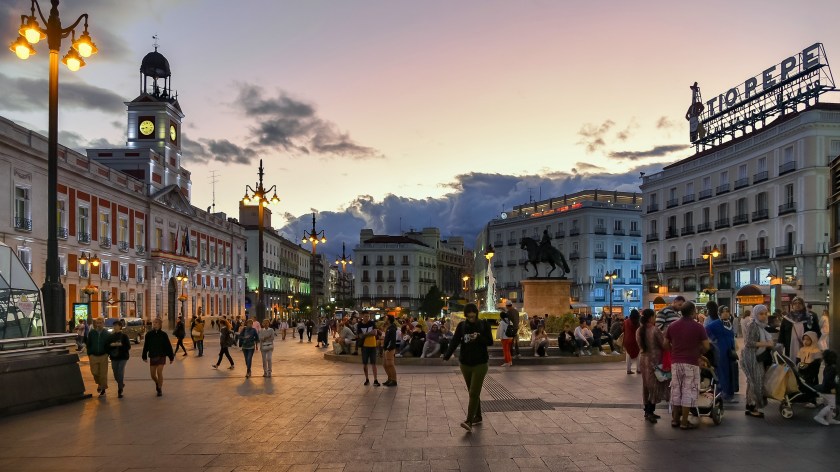
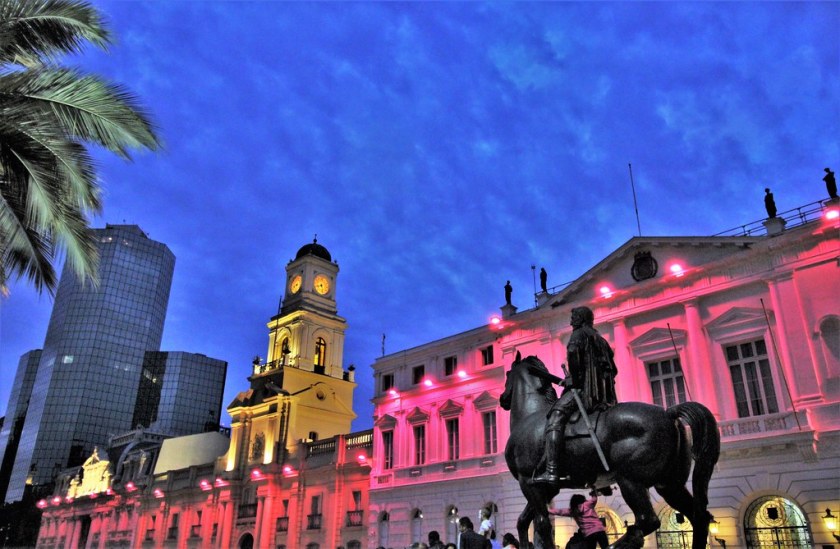
Fotografías: (1) Puerta del Sol, de Adobe Stock, editada por Mar Martínez Leonard (2) Plaza de Armas en Santiago, Jacobo Borizon Roitburd
Del poemario «Memento» de Juancho Solís de Ovando, Galymar Editores
By Juancho Solís de Ovando
I could never answer
why I departed Spain
why I left Madrid behind me
I simply came back,
retraced my steps,
abandoning my destiny
of stray dog looking for company
that those years
of exile or banishment or emigration or escape
(depending how you look at it)
taught me

And yet, I still think I'm a pilgrim
of a collective story
and that I belong
to those memories
in which Madrid
smelled of sun in the mornings

Ah the joy of those
who with me met the aurora!

Privilege of the privileged
witnessing the end of the sacrifice!

When the beast crawled
between blood spits
(and although it claimed
its last victims
on a long winter night)
drowning in the spilled blood

How to forget the runs
in the narrow streets of Madrid!
the Moncloa reddened
with students,
the dinners at Toño's house
when we were drunk with dreams
in the Casa de Campo
singing in the boisterous night
talking about African,
Latin American,
and Asian utopias,
the Festival of the Iberian Peoples
wrapped up in its songs,
and the political prisoners
of Carabanchel
getitng out
between hugs and tears

Fists raised walking the roads
and the mighty crowd
in its silence
bidding farewell
to Atocha's lawyers
the communists, legal and festive,
the Pasionaria
entering the Parliament
and Alberti with her
at the table of honor
and the exiles
returning with their striven accent
hidden in their suitcases,
artists, intellectuals and writers
unearthing
memories and affections
received at the table like brothers,
sex sneaking through the windows
and fear hiding
its claws and its tail

The will to live, to live until death
in squares burning with desire

Our songs received with euphoria
by happy and screaming Spaniards
and "Chile will win"!
in a jungle of hands
in popular festivals

Gonzalo and Jorge with me
spraying newspapers in the streets
and Loly, the Santonja
-joyful and caring-
Belén and the other Lola
-the Martínez-
Lolita and Lina
José Muñagorri and Leandro
the Charo -eternally unamunian-
Rafa arguing heatedly
and Pedro laughing in silence
Ginés,
and Juan Manuel
-calm and pondered-

Now I have a house
here in Santiago
From there you can see
the Cordillera

It is a house
bathed and illuminated
with nearby trees and birds,
my daughters and my wife are next to me
at the entrance door
the table is served,
to the point is the wine

And the steaming
dishes of the banquet
are waiting for you
to toast for those times
for ours
the usual
when Madrid was a party, fellows
Recording by Lunnatico
Translation by Mar Martínez Leonard
Photographs: (1) Puerta del Sol, from Adobe Stock, edited by Mar Martínez Leonard (2) Plaza de Armas in Santiago, Jacobo Borizon Roitburd
From the book of poems «Memento» by Juancho Solís de Ovando, Galymar Publishing House

 EL ARTCA