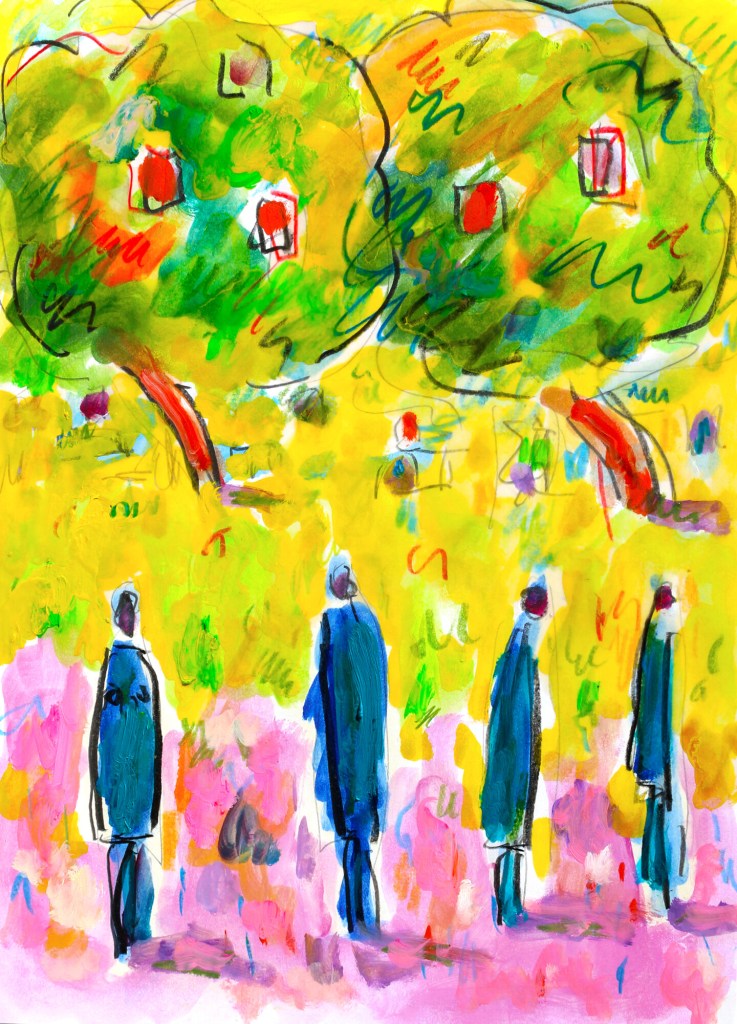
MUCHO BARRIO/ Much Neighborhood

Por Mar Martínez Leonard


Ella traía, aunque no quería, a Barrio debajo del brazo. En la mañana intentaba a veces botarlo en la parada del bus con algún pasajero despistado, o en las estanterías refrigeradas de la tienda de abarrotes. Pero Barrio se resistía a salir y se aferraba aún más a los cargadores de la cesta de su huésped. Ya de vuelta en la oficina, había dejado a Barrio olvidado en su camioneta, con la esperanza de que se olvidara de ella, y ahora estaba sentada en su cubículo con las manos sobre las sienes y los ojos cerrados, en espera de la llegada de su jefe. Así, liberada de la carga de Barrio, no podía evitar la añoranza de su olor a café y a cerveza rubia, el ambiente de los lunes de mercado, sus vivos colores, y esas calles elegidas por los bohemios para sus desvaríos. Si bien, su vista se deleitaba ahora en las luces de neón y los rascacielos infinitos de la elegante parte de la ciudad donde estaba su oficina, sin embargo volvía a aterrizar mentalmente, como si volara en un dron, sobre el tejado del edificio con más historia y personalidad de Barrio.

Imágenes: Murales de Otto Schade


Lectura de la autora

————-
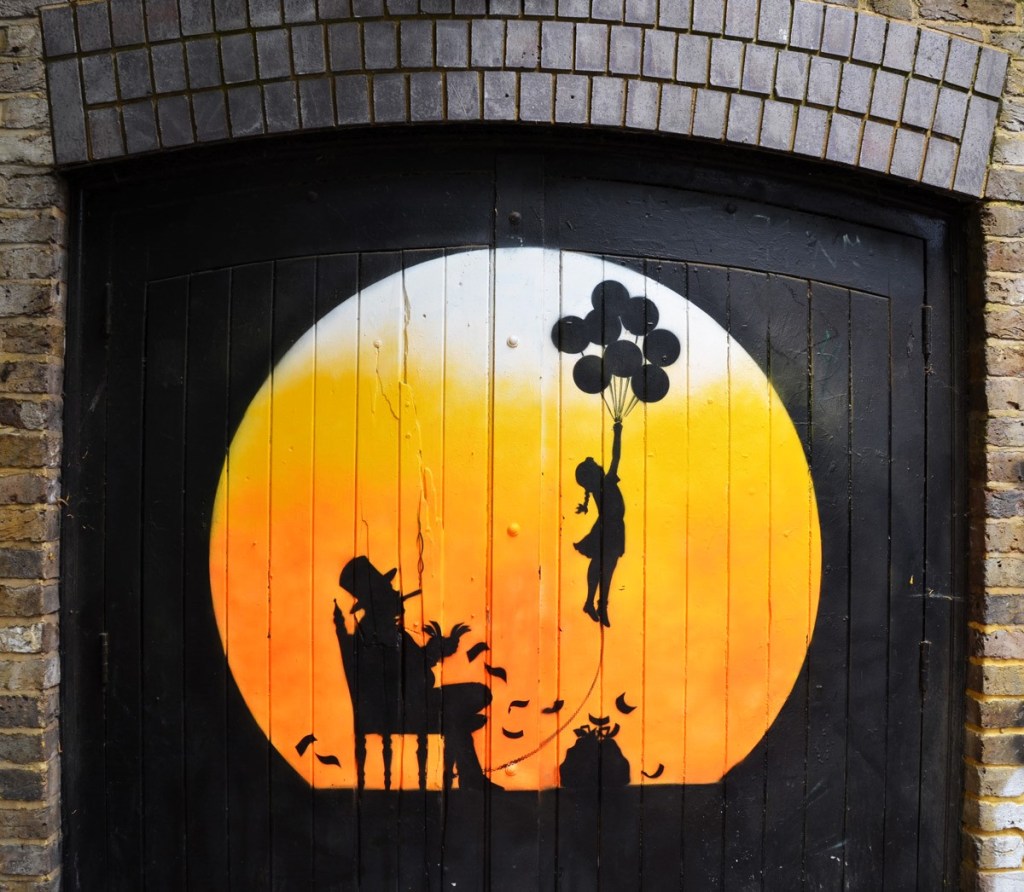
By Mar Martinez Leonard


She was carrying, although she didn’t want to, Neighborhood under her arm. In the morning she would sometimes try to get rid of it at the bus stop with some clueless passenger, or at the refrigerated shelves of the grocery store. But Neighborhood was reluctant to leave and clung even more to the chargers of her guest’s basket. Back at the office, she had left Neighborhood forgotten in her truck, hoping he would forget about her, and was now sitting in her cubicle with her hands on her temples and her eyes shut, waiting for her boss to arrive. Thus, freed from the burden of Neighborhood, she could not avoid the longing for its smell of coffee and blond beer, the atmosphere of market Mondays, its bright colors, and those streets chosen by the bohemians for their ravings. While her eyes now reveled in the neon lights and infinite skyscrapers of the elegant part of the city where her office was located, she nevertheless mentally landed again, as if flying in a drone, on the roof of the building with more history and personality of Neighborhood.

Images: Street art by Otto Schade
TODOS CONTRA UNO – All Against One

Por Mar Martínez Leonard

Entró en la habitación oscura casi sin hacer ruido y se dirigió hacia la cama. Estaba a medio hacer, pero tenía sábanas limpias. Se tumbó en ella. No encendió la luz de la mesita. Cualquier sonido de los vecinos o de la calle le hacía estar alerta. No había sido culpa suya. Uno de los hombres de don Jacinto intentó arrancarle a ese bebé de los brazos en plena plaza, y fue por eso que le empujó. Y es que Martín, contrariamente a las antiguas reglas de la servidumbre, creía de corazón que el cuidado de un infante correspondía a sus padres. Seguidamente, había entregado el bebé a la madre, quien era además su única amiga desde que se había mudado al pueblo. Después, a la entrada de su casa, no había visto la inscripción «Villa Bella», y la había encontrado en el suelo partida en dos. Eso no había sido obra de los hombres de don Jacinto, simplemente no habían tenido tiempo de cruzar el esparragal. Pero el pueblo era tan pequeño que las malas noticias volaban entre sus casas adosadas picoteando la frente y las ideas de algunos aldeanos curtidos por el miedo y la costumbre: el boca a boca había funcionado en minutos. Ya no podría entrar en casa como quien entra en un refugio seguro. Aún así, la suavidad fresca de las sábanas y el recuerdo de sentirse protegido eran tan reconfortantes que se durmió.

Fue todo muy rápido y eficaz. Lo único que realmente le dolió fue la puñalada en el estómago. Sobre todo, notaba que se le estaba yendo la vida por esa herida. Luego perdió el conocimiento y, cuando despertó, se sentía muy débil y estaba tumbado boca abajo sobre algo que debía ser una planta espinosa. Después vio a aquel niño hijo del arriero y sintió una patada en la espalda. Pidió auxilio y el niño corrió asustado. En seguida, volvieron los hombres de don Jacinto, y esta vez, su verdugo le pidió disculpas antes de apuñalarlo: «Mira, que yo no tengo ná contra ti. Que yo soy un mandao.»

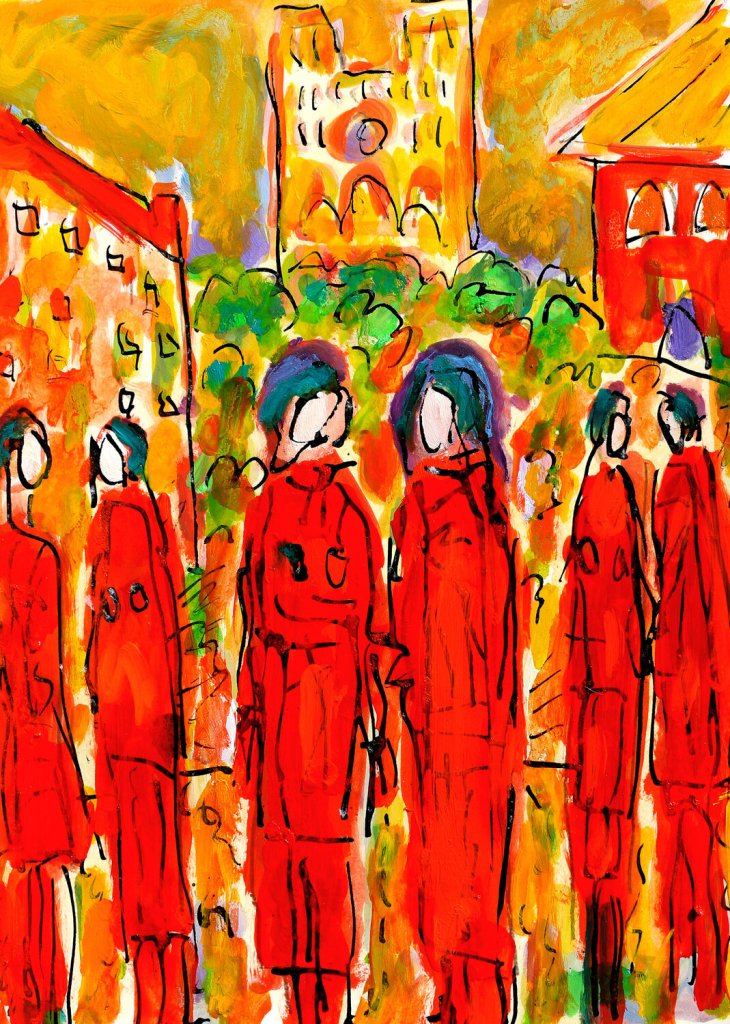
Imágenes: (1) Servitud moral, óleo y tinta china sobre papel, de Jean Mirre https://www.singulart.com/es/obras-de-arte/jean-mirre-servitude-morale-1787417 (2) Sonámbulos, Óleo, Lápiz de color en Papel, de Jean Mirre https://www.singulart.com/es/obras-de-arte/jean-mirre-somnambules-1782287

By Mar Martínez Leonard

He walked into the dark room almost silently and headed towards the bed. It was half done, but had clean sheets. He lay on it. He didn’t turn on the light of the night table. Any sound from neighbors or the street made him be alert. It wasn’t his fault. One of Don Jacinto’s men tried to tear that baby from his arms in the middle of the square, and that’s why he pushed him. The thing was that Martin, contrary to the ancient rules of servitude, believed from his heart that the care of an infant corresponded to their parents. He had then given the baby to the mother, who was also his only friend since he moved to the village. Then, at the entrance of his house, he had not seen the inscription «Villa Bella», and had found it on the ground split in two. That had not been the work of Don Jacinto’s men, they simply had not had time to cross the asparagus fern and do it. But the village was so small that the bad news flew between the terraced houses pecking at the forehead and the ideas of some villagers hardened by fear and custom: word of mouth had worked in minutes. He could no longer enter the house as one who enters a safe haven. Still, the fresh softness of the sheets and the memory of feeling protected were so comforting that he fell asleep.

It was all very fast and efficient. The only thing that really hurt him was the stab in the stomach. Above all, he felt that his life was going away through that wound. Then he lost consciousness, and by the time he woke up, he was feeling very weak, and he was lying face down on something that felt like a thorny plant. Later he saw that boy, the son of the muleteer, and felt a kick in the back. He asked for help, and the boy ran scared. Immediately after, Don Jacinto’s men returned, and this time, the headsman apologized before stabbing him: «Look, I have nothing against you. I am an errand runner».

Images: (1) Moral servitude, oil and India ink on paper, by Jean Mirre https://www.singulart.com/es/obras-de-arte/jean-mirre-servitude-morale-1787417 (2) Somnambules, Oil, Colored Pencil on Paper , by Jean Mirre https://www.singulart.com/es/obras-de-arte/jean-mirre-somnambules-1782287